

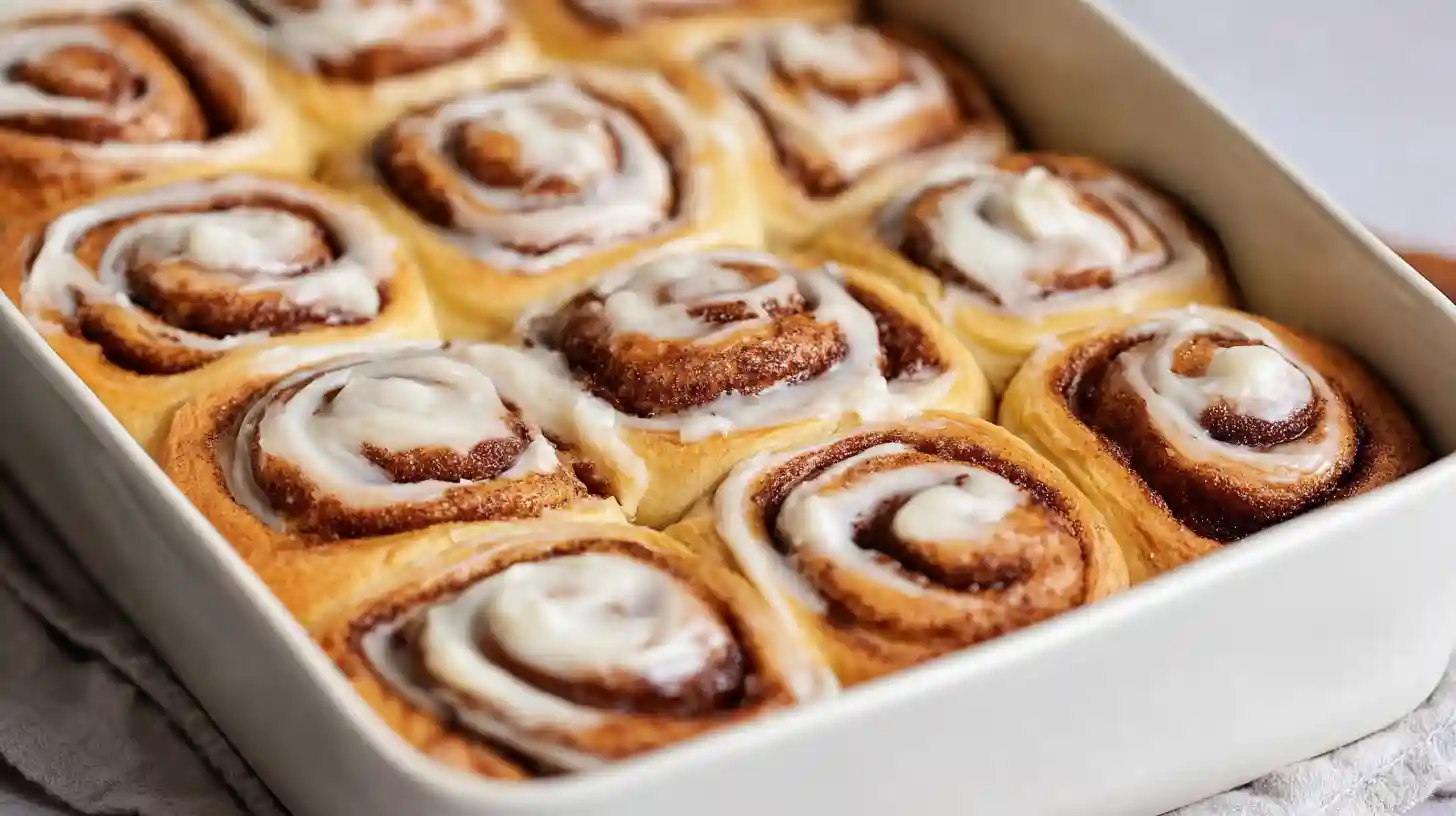
Pull-apart, gooey, deeply cinnamon-flavored rolls with a cloud-soft crumb are not as complicated to make at home as most people assume. The Best Cinnamon Rolls EVER start with an enriched dough built on butter, eggs, and warm milk that bakes up pillowy and tender every single time. The cinnamon filling is thick enough to actually taste through the bread, and the cream cheese frosting melts into the warm rolls as soon as it’s spread on. This is the one recipe in that category that earns the name.
The biggest difference between average homemade rolls and a genuinely best cinnamon roll recipe is how the dough is handled. Over-kneading makes it tough. Under-proofing leaves it dense. Getting both right is simpler than it sounds, and this recipe walks through each step clearly enough that first-timers get good results alongside experienced bakers who want a reliable go-to.
What Goes Into The Best Cinnamon Rolls EVER
The Enriched Dough
- 3 and 3/4 cups all-purpose flour, spooned and leveled, plus extra for dusting
- 2 and 1/4 tsp instant yeast, 1 standard packet
- 1/4 cup granulated sugar
- 1 tsp salt
- 3/4 cup whole milk, warmed to 110°F
- 1/3 cup unsalted butter, melted and slightly cooled
- 2 large eggs, room temperature
- 1 tsp vanilla extract
Cinnamon Sugar Filling
- 1/2 cup unsalted butter, softened to room temperature, not melted
- 3/4 cup brown sugar, packed
- 2 and 1/2 tbsp ground cinnamon
- Pinch of salt
Cream Cheese Frosting
- 4 oz cream cheese, fully softened
- 1 and 1/2 cups powdered sugar, sifted
- 3 tbsp whole milk or heavy cream
- 1/2 tsp vanilla extract
- Small pinch of salt
Whole milk gives the dough the fat content it needs to stay soft through baking. Low-fat milk produces a slightly drier, less tender crumb. For an easy cinnamon rolls recipe that leans even richer, replace 2 tablespoons of the milk with heavy cream. It changes the dough only slightly but produces a noticeably more buttery flavor in the finished roll. Instant yeast is the most reliable choice since it doesn’t require proofing and incorporates directly into the dry ingredients.
The filling butter must be soft but not melted. Softened butter spreads in a thick, even layer that holds the cinnamon sugar firmly in place as you roll. Melted butter runs off the dough and pools at the edges, creating uneven filling distribution and wet patches at the bottom of each roll. Leave butter at room temperature for at least an hour before using if your kitchen is cool.
Step-by-Step Method for The Best Cinnamon Rolls EVER
- Combine flour, instant yeast, sugar, and salt in a large bowl. Stir briefly to distribute.
- Add warm milk, melted butter, eggs, and vanilla. Mix with a wooden spoon or dough hook until a rough dough forms.
- Knead by hand on a lightly floured surface for 8 to 10 minutes until the dough is smooth, soft, and slightly tacky. Don’t keep adding flour. A little stick is correct. By stand mixer with a dough hook, knead on medium for 6 to 7 minutes.
- Shape into a ball and place in a lightly oiled bowl. Cover with plastic wrap and let rise somewhere warm for 1 to 1.5 hours until doubled in size.
- Punch the dough down gently. Turn out onto a lightly floured surface and roll into a 16 by 12 inch rectangle, keeping the thickness even.
- Spread softened butter evenly across the entire dough surface, stopping 1/2 inch from one long edge.
- Mix brown sugar, cinnamon, and salt together in a small bowl. Sprinkle evenly over the butter in a thick, generous layer.
- Starting from the long edge with the filling all the way to the border, roll the dough toward the bare edge into a tight, even log. Pinch the seam firmly closed.
- Slice into 12 equal rolls using unflavored dental floss or a sharp serrated knife.
- Arrange rolls cut-side up in a greased 9×13 inch pan. Cover loosely and let rise for 45 to 60 minutes until puffy and the rolls are pressing against each other.
- Preheat oven to 350°F. Bake 22 to 26 minutes until the tops are light golden. The center rolls should feel set, not doughy, when lightly pressed.
- Beat cream cheese, powdered sugar, milk, vanilla, and salt together until smooth and creamy.
- Spread frosting over the rolls while they are still warm. Serve immediately.
Unflavored dental floss is the cleanest cutting method for the log. Slide the floss underneath, bring both ends up above the log, cross them over each other, and pull outward simultaneously. The roll separates perfectly without any compression on the spiral. A knife pressed straight down crushes the layers together and distorts the shape before baking. If using a knife, use a gentle sawing motion with a sharp serrated blade.
Pro Tips That Actually Make a Difference
For extra gooey rolls with a caramelized base, pour two to three tablespoons of heavy cream over the risen rolls in the pan right before they go into the oven. The cream soaks into the base of each roll during baking and creates a soft, almost sticky bottom layer that pairs with the crisp outer edge. This is the one cinnamon roll recipe homemade tip that most people try once and never skip again.
Don’t overbake. It’s the most common mistake with tasty baking projects involving enriched dough. Light golden tops on the outer rolls with a slightly paler center row is the visual cue to pull them out. The center continues cooking from residual heat while the frosting goes on. Darker tops mean the outer rolls are already dry inside even if the center looks fine.
Variations for Different Occasions
For easy baking recipes desserts that push toward the more indulgent side, add 1/2 cup of mini chocolate chips over the cinnamon sugar layer before rolling. The chips melt into the filling during baking and create a chocolate-cinnamon swirl that’s somewhere between a cinnamon roll and a pain au chocolat. Toasted pecans or walnuts scattered over the filling add crunch and a nutty depth to the classic sweet dishes recipes base.
For an orange-spiced version popular as easy snack recipes and brunch options, add a tablespoon of fresh orange zest to the filling and another tablespoon to the frosting. The citrus lifts the entire flavor profile and makes the rolls taste distinctly different from the original without changing any technique. Cardamom added to the cinnamon at a 1-to-4 ratio creates a Scandinavian-style warmth that works particularly well in cooler months.
Make-Ahead, Storage, and Freezing
The most practical make-ahead method for best cinnamon rolls is the overnight cold rise. After cutting and placing rolls in the pan, cover tightly with plastic wrap and refrigerate overnight instead of doing the second proof. The next morning, pull the pan from the fridge and let it sit at room temperature for 45 to 60 minutes until visibly puffy before baking as directed. Fresh warm rolls for breakfast without pre-dawn dough work.
Baked, unglazed rolls store wrapped tightly at room temperature for 2 days or refrigerated for up to 5 days. Warm individual rolls in the microwave for 20 to 25 seconds under a loosely draped damp paper towel. Add frosting after warming rather than storing frosted rolls since the glaze absorbs into the dough overnight and the texture changes. For baked dessert recipes that freeze well, wrap individual unfrosted rolls and freeze for up to 2 months. Thaw at room temperature, warm gently, then frost fresh before serving.
FAQ
My dough didn’t rise. What went wrong?
The most likely cause is milk that was too hot. Above 120°F, yeast dies and the dough won’t rise no matter how long you wait. Use a thermometer to check that the milk is between 105°F and 110°F before adding the yeast. Expired yeast is the second common cause. If your yeast packet has been open for a while, test it first by mixing it into the warm milk with a pinch of sugar and watching for foam to develop within 10 minutes.
Can I make these without a stand mixer?
Yes, and hand kneading works well for this dough. Mix everything together in a large bowl until a rough dough forms, then knead on a lightly floured surface for 8 to 10 minutes. The dough is ready when it’s smooth, springs back slowly when poked, and no longer sticks aggressively to the surface. Hand kneading takes slightly longer than a machine but the finished dough is identical.
How do I get clean spiral layers in each roll?
Roll the dough log tightly and evenly, and use dental floss rather than a knife for cutting. Loose rolling creates gaps between the layers that fill with butter and leak during baking. Uneven log diameter means some rolls are fatter than others and bake at different rates. A firm, consistent roll from edge to edge and floss cutting rather than pressing with a knife preserves the spiral in every piece.
Can I use active dry yeast instead of instant?
Yes. Dissolve the active dry yeast in the warm milk with a teaspoon of sugar and wait 5 to 10 minutes for it to foam before proceeding with the recipe. If it doesn’t foam, the yeast is inactive and should be replaced before you continue. Everything else stays the same. Rise times may run 10 to 15 minutes longer than with instant yeast depending on room temperature.
Why are the centers of my rolls underbaked?
The rolls were likely packed too tightly in the pan or the oven temperature was lower than indicated. The center rolls always take slightly longer than the outer ones because less direct heat reaches them. If the outer rolls look done but the center row feels doughy, tent the whole pan loosely with foil and bake for 5 more minutes. The foil prevents the outer rolls from over-browning while the center finishes.
Can I freeze the dough before baking?
Yes. After cutting and placing rolls in the pan, cover tightly and freeze before the second rise. When ready to bake, transfer the pan to the refrigerator to thaw overnight, then let it sit at room temperature for 1 to 2 hours until the rolls look puffy and have risen visibly. Bake as directed. The frozen dough method gives results almost identical to baking fresh, making these practical for prepping ahead for a weekend morning.
The Best Cinnamon Rolls EVER
Ingredients
Equipment
Method
- Mix flour, yeast, sugar, and salt. Add warm milk, melted butter, eggs, and vanilla. Knead 8 to 10 minutes until smooth and slightly tacky.
- Rise covered in an oiled bowl for 1 to 1.5 hours until doubled.
- Roll dough into a 16×12 inch rectangle on a lightly floured surface.
- Spread softened butter over dough, then sprinkle cinnamon sugar filling evenly over the top.
- Roll tightly into a log, cut into 12 rolls with dental floss, and place in greased 9×13 pan.
- Rise again 45 to 60 minutes until puffy. Bake at 350°F for 22 to 26 minutes until light golden.
- Spread cream cheese frosting over warm rolls immediately out of the oven and serve.
Notes
- Milk must be 110°F maximum or it kills the yeast.
- Use softened, not melted, butter for the filling to keep layers intact.
- Don’t overbake – light golden outer rolls with a set center is the target.
- Pour 2 to 3 tbsp heavy cream over risen rolls before baking for extra gooey results.
- For overnight rolls, refrigerate after cutting and let rise at room temp before baking.