
Pull everything out of the refrigerator in the morning, spend about 20 minutes on prep, and by dinner a Crock Pot Beef Stew is waiting with fall-apart meat and a thick, deeply savory broth that tastes like it took all day, because it did. Low-and-slow cooking does the work that stovetop simmering can never fully replicate, breaking down the collagen in beef chuck into gelatin that naturally thickens the broth and coats every vegetable in richness. This thick slow cooker beef stew doesn’t rely on heavy flour dredging or complicated technique. It relies on the right cut of meat, a few pantry staples, and time.
Searing the beef before it goes into the slow cooker is listed as optional in many recipes and skipped just as often. It isn’t optional if flavor matters. That browned crust on the outside of the beef adds a depth the finished stew simply doesn’t have without it, and the difference is noticeable in every spoonful.
Crock Pot Beef Stew Ingredients
- 2.5 lbs beef chuck roast, cut into 1.5-inch cubes
- 3 tbsp all-purpose flour
- 1.5 tsp salt, divided
- 1 tsp black pepper, divided
- 2 tbsp olive oil or vegetable oil for searing
- 4 medium Yukon Gold or red potatoes, cut into chunks
- 3 large carrots, peeled and cut into 1-inch pieces
- 3 celery stalks, sliced
- 1 medium yellow onion, diced
- 4 garlic cloves, minced
- 2 tbsp tomato paste
- 1 tbsp Worcestershire sauce
- 2 cups beef broth, low sodium preferred
- 1 tsp dried thyme
- 1 tsp smoked paprika
- 2 bay leaves
- 2 tbsp cornstarch mixed with 2 tbsp cold water, for thickening at the end
- Fresh parsley for serving
How to Make Crock Pot Beef Stew from Morning to Dinner
Chuck roast is the correct cut for this slow cooked beef stew. It has the right ratio of fat and connective tissue to stay moist and tender through 8 hours of low cooking. Lean cuts like round or sirloin don’t have enough intramuscular fat and dry out into chewy, stringy pieces long before the broth has time to develop. Pre-cut beef stew cubes from the grocery store work fine but check the package since they are sometimes cut from leaner parts of the animal. When in doubt, buy a chuck roast and cut it yourself.
- Pat beef cubes completely dry with paper towels. Moisture on the surface of the meat creates steam in the hot pan and prevents searing. Toss the dried beef with flour, 1 teaspoon of salt, and 1/2 teaspoon of black pepper until each piece is lightly coated.
- Heat oil in a large skillet over high heat until shimmering. Sear beef in a single layer without crowding, about 2 to 3 minutes per side until deeply browned. Work in batches rather than crowding the pan. Set seared beef aside.
- Add a splash of beef broth to the hot skillet and scrape up all the browned bits from the bottom with a wooden spoon. Pour this deglazing liquid directly into the slow cooker. Those caramelized bits carry significant flavor and should not be left behind in the pan.
- Layer potatoes, carrots, celery, and onion in the bottom of the slow cooker. Add seared beef on top of the vegetables.
- Whisk together beef broth, tomato paste, Worcestershire sauce, minced garlic, thyme, smoked paprika, remaining salt, and pepper in a bowl. Pour over the beef and vegetables. Tuck bay leaves in along the sides. The liquid should come about halfway up the contents of the slow cooker, not cover everything completely. The vegetables and beef release moisture as they cook and the stew will have plenty of liquid by the end.
- Cover and cook on low for 8 to 9 hours, or on high for 4 to 5 hours. The beef is done when it pulls apart easily with two forks and the vegetables are completely tender when pierced.
- In the last 30 minutes of cooking, stir in the cornstarch slurry. Replace the lid and cook on high for 20 to 30 more minutes until the broth thickens to a glossy, stew-like consistency. Remove bay leaves before serving.
Getting the Broth Thick Without Flour Overload
The cornstarch slurry added in the final 30 minutes is the cleanest way to thicken beef stew in slow cooker format. Cornstarch produces a glossy, translucent finish that looks more like a restaurant-quality broth than a flour-thickened stew, which can turn cloudy and starchy if too much is used. Start with 2 tablespoons of cornstarch and assess after 20 minutes. If more thickness is needed, mix another tablespoon with a tablespoon of cold water and stir it in, then cook another 15 minutes. Adding cornstarch slurry too early in the cook, rather than at the end, causes it to break down over the long cook time and lose its thickening effect entirely.
Tomato paste is a small ingredient with a large impact in the best slow cooker beef stew. It adds umami, color, and a concentrated savory depth to the broth that plain broth alone can’t produce. Two tablespoons is the right amount for this recipe. More than that and the tomato flavor becomes identifiable and forward rather than a background note.
Variations and Ingredient Swaps
Red wine is a common addition to beef stew cubes recipes crockpot versions. Replace 1/2 cup of the beef broth with a dry red wine like Cabernet Sauvignon or Merlot. Add it to the deglazing step in the skillet rather than pouring it cold into the slow cooker, which lets the alcohol cook off slightly and leaves the deeper fruit and tannin notes behind in the broth. For a beefstew slowcooker version with mushrooms, add 8 oz of quartered cremini mushrooms during the last 2 hours of cooking. Added too early, mushrooms become spongy and lose their texture entirely in the long cook environment.
Storing and Serving Slow Cooker Beef Stew
Store cooled stew in an airtight container in the refrigerator for up to 4 days. The broth gels when cold due to the gelatin released from the beef chuck, which is a sign of good slow cooked beef stew rather than a defect. It liquefies again fully when reheated. Reheat on the stovetop over medium-low heat, stirring occasionally and adding a splash of broth if it has thickened more than desired. For freezing, leave potatoes out of the portion being frozen since cooked potatoes turn grainy and mealy after thawing. Freeze without potatoes for up to 3 months and add freshly cooked potato chunks when reheating the thawed stew. Serve with crusty bread, buttered rolls, or over a scoop of mashed potato for a meal that uses the broth as its own sauce.
FAQ
Can I skip searing the beef before slow cooking?
Technically yes, but the flavor of the finished stew will be noticeably flatter. Searing creates a Maillard reaction on the surface of the meat that produces hundreds of flavor compounds that don’t develop during moist low heat cooking. The beef will still be tender without searing, but the broth won’t have the same depth. If time is genuinely tight, sear at least half the beef rather than skipping entirely, which gives the broth enough browning flavors to taste like a properly developed beef stew in slow cooker form rather than a boiled beef and vegetable soup.
Why is my beef still tough after 8 hours?
The most common cause is using the wrong cut. Lean beef cuts don’t break down into tender pieces regardless of how long they cook since they lack the collagen and fat that transforms into gelatin and richness during slow cooking. The second cause is cooking on high the entire time rather than low and slow. High heat tightens the muscle fibers quickly and produces chewy meat even in a slow cooker. Stick to low for 8 to 9 hours for the correct texture in this slower cooker beef stew. If beef chuck is confirmed as the cut used and it is still tough at 8 hours, give it another full hour on low before checking again.
Do I need to add liquid to cover everything in the slow cooker?
No. The liquid should reach about halfway up the contents of the pot at the start. The vegetables and beef release substantial moisture as they cook, and a slow cooker traps steam under the lid rather than allowing evaporation the way a stovetop pot does. Starting with too much liquid produces a thin, watery broth that is difficult to thicken properly at the end and dilutes the flavor of the whole stew. For thick slow cooker beef stew with a rich, coating broth, less liquid at the start is always better than more.
What potatoes hold up best in a slow cooker?
Yukon Gold and red potatoes are the best options because their waxy texture holds together through long cooking without falling apart into the broth. Russet potatoes are too starchy and disintegrate after 6 to 8 hours in liquid, which makes the broth thick and starchy rather than clear and glossy. Baby potatoes left whole or halved also hold up exceptionally well and are convenient since they don’t require much cutting. If russets are all that’s available, add them only in the last 2 to 3 hours of cooking in the beef stew in crock pot slow cooker rather than at the beginning with everything else.
Can I make this on high instead of low?
Yes, with adjustments. Cook on high for 4 to 5 hours instead of 8 to 9 on low. The beef will be tender but may not reach quite the same level of fall-apart texture that the low-and-slow method produces since high heat tightens muscle fibers slightly before the collagen has fully broken down. Check the beef at the 4-hour mark by pressing a piece with a fork. If it resists, give it another 30 to 45 minutes. The cornstarch thickening step still applies in the last 20 to 30 minutes regardless of which temperature setting is used for the beefstew slowcooker process.
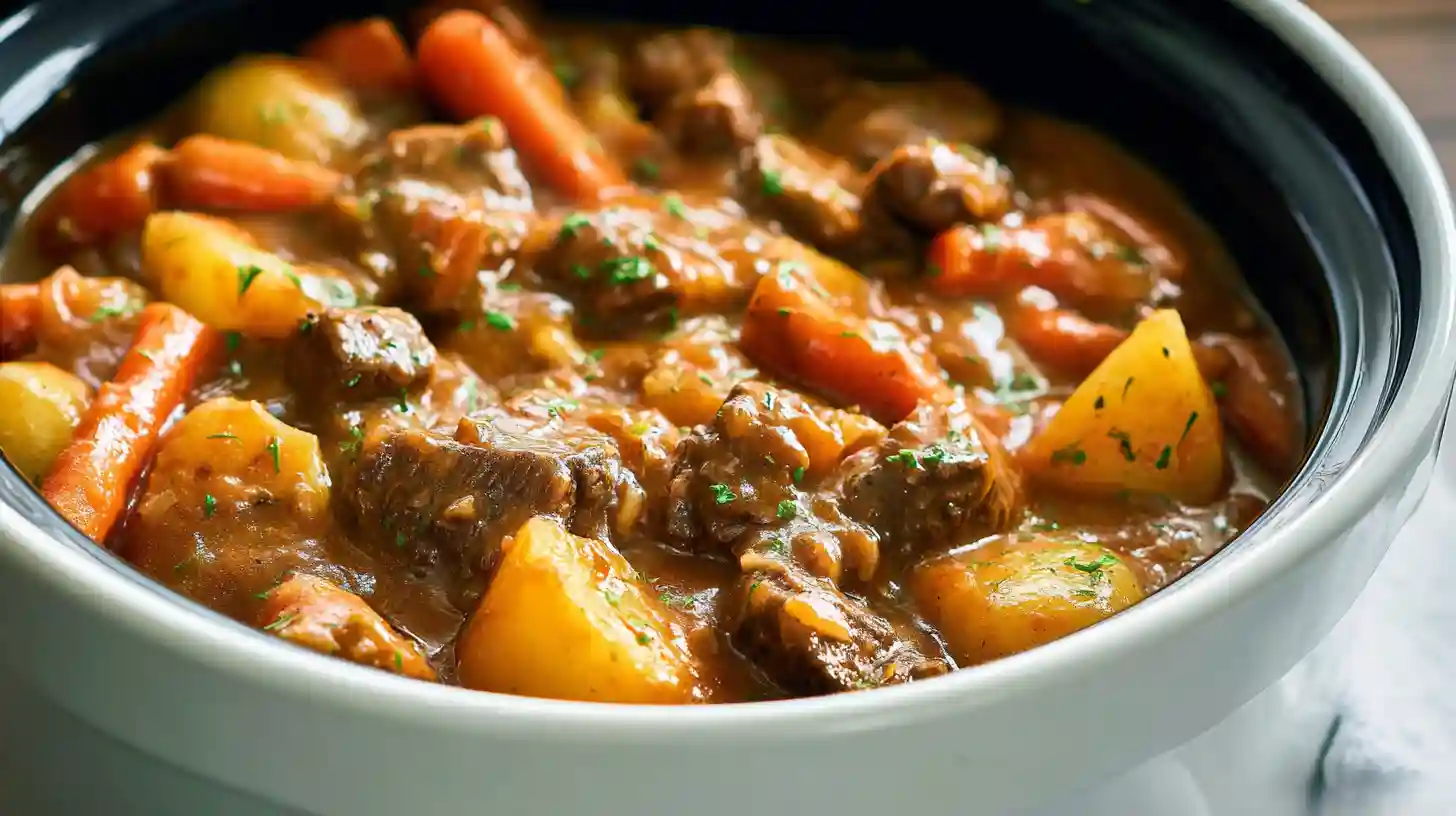
Crock Pot Beef Stew
Ingredients
Equipment
Method
- Pat beef dry, toss with flour, 1 tsp salt, and 1/2 tsp pepper. Sear in batches in hot oil over high heat, 2 to 3 minutes per side until deeply browned. Set aside.
- Deglaze the skillet with a splash of broth, scraping up all browned bits. Pour into the slow cooker.
- Layer potatoes, carrots, celery, and onion in the slow cooker. Add seared beef on top.
- Whisk together remaining broth, tomato paste, Worcestershire, garlic, thyme, paprika, remaining salt and pepper. Pour over contents. Tuck in bay leaves.
- Cook on low 8 to 9 hours or high 4 to 5 hours until beef is fall-apart tender and vegetables are completely soft.
- Stir in cornstarch slurry in the last 30 minutes. Cook on high 20 to 30 minutes until broth is thick and glossy. Remove bay leaves. Serve with fresh parsley.
Notes
- Use beef chuck roast only – lean cuts like round or sirloin dry out and turn chewy during long slow cooking.
- Do not skip searing – the browned crust adds flavor depth that slow cooking alone cannot replicate.
- Deglaze the searing pan and add those browned bits to the slow cooker – they carry significant flavor.
- Liquid should reach halfway up contents at the start, not cover everything – the stew releases its own moisture as it cooks.
- Add cornstarch slurry only in the final 30 minutes – adding earlier causes it to break down and lose its thickening effect.
- Freeze without potatoes for up to 3 months – potatoes turn grainy after freezing and thawing.