
Some pasta dinners require two pots, a colander, and a separate sauce pan. Creamy Beef and Shells is not one of them. Everything, the ground beef, the uncooked shell pasta, the broth, and the cream, goes into a single wide skillet and finishes together in about 30 minutes. The pasta absorbs the seasoned broth as it cooks and releases its starch directly into the sauce, which is what makes the final texture thick and glossy without needing flour or a separate roux. It’s a beef pasta dinner that delivers real comfort on a weeknight without much effort or cleanup.
The key detail is letting the taco-seasoned beef liquid fully evaporate before building the sauce base. A wet beef mixture dilutes the sauce and prevents it from thickening cleanly, so that one extra minute in the pan matters.
Everything You Need for Creamy Beef and Shells
Straightforward grocery ingredients. Nothing here requires a specialty store, and most of it is probably already in your kitchen.
- 1 lb ground beef, 80/20
- 1 small yellow onion, finely diced
- 4 cloves garlic, minced
- 1 tbsp olive oil
- 1 tbsp tomato paste
- 1 can (14.5 oz) diced tomatoes, undrained
- 2 cups beef broth
- 1 cup water
- 8 oz medium shell pasta, uncooked
- 1 tsp Italian seasoning
- 1/2 tsp smoked paprika
- 1/2 tsp onion powder
- Salt and black pepper to taste
- 3/4 cup heavy cream
- 1.5 cups shredded sharp cheddar or American cheese, block-shredded
- Fresh parsley for garnish
How to Cook Creamy Beef and Shells in One Pan
Use a large, deep skillet or wide sauté pan with at least 3-inch sides. Shallow pans make stirring difficult and the pasta needs room to expand as it absorbs liquid without crowding.
- Heat olive oil in a large deep skillet over medium-high heat. Add diced onion and cook 3 minutes until softened and translucent.
- Add ground beef, breaking it apart with a spoon. Cook until fully browned, about 5 minutes. Drain excess fat, leaving roughly 1 tablespoon in the pan for flavor.
- Add garlic and cook 30 seconds. Stir in tomato paste and let it cook directly against the pan surface for 1 minute until it darkens slightly. This step builds depth into the sauce base.
- Pour in diced tomatoes with their liquid, beef broth, and water. Add Italian seasoning, smoked paprika, onion powder, salt, and pepper. Stir everything together and bring to a boil.
- Add uncooked shell pasta. Stir well to submerge as much pasta as possible in the liquid. Reduce heat to medium, cover, and cook 12 to 14 minutes, stirring every 3 to 4 minutes to prevent sticking on the bottom, until pasta is just tender and most liquid has absorbed.
- Reduce heat to low. Pour in heavy cream and stir through. Let it warm for 1 full minute without boiling.
- Add shredded cheese in two additions, stirring between each until the sauce is fully smooth and glossy. If it looks too thick, add a small splash of broth and stir to loosen. Taste and adjust seasoning before serving.
Why the Sauce Turns Grainy and How to Prevent It
Cheese added to boiling or very hot liquid breaks into greasy, grainy solids rather than melting smoothly. The cream goes in first because it lowers the liquid temperature slightly and creates a gentler environment for the cheese to melt into. Keep heat firmly on low during this final stage and stir continuously rather than walking away. Adding cheese in two stages with stirring in between allows the first addition to fully incorporate before the second goes in, which produces a consistently smooth, cohesive sauce rather than one that looks curdled at the edges.
For beef casserole recipes richness, stir in one tablespoon of cream cheese alongside the shredded cheese. It melts into the sauce silently but adds a noticeable creaminess and slight tang that deepens the overall flavor without making the dish heavier than it already is.
Variations Worth Trying With This Base
A can of Rotel diced tomatoes with green chiles swapped in for plain diced tomatoes pushes this toward a Tex-Mex direction that works well as a variation on easy beef recipes for dinner when you want something with mild heat. The method stays identical. For a stuffed shells recipe flavor without the baking involved, use ricotta instead of cream cheese stirred in at the end and add a handful of baby spinach right after the cream, allowing it to wilt for about 90 seconds before the cheese goes in.
Ground turkey or Italian sausage substitute cleanly for the ground beef with no timing changes. Italian sausage in particular adds fennel and herb notes that make this feel like a different dish entirely without any additional seasoning adjustments. For beef dishes that need more vegetable volume, stir in a cup of frozen corn or peas in the final 2 minutes of pasta cooking time. Both heat through without needing extra cook time and add color to the finished bowl.
Storage, Reheating, and Next-Day Texture
Leftovers keep in an airtight container in the fridge for up to 4 days. The pasta dinner recipes rule about pasta absorbing sauce overnight applies here, so expect a noticeably thicker, denser texture by day two. Add 3 to 4 tablespoons of beef broth or water before reheating and stir while warming over medium-low heat until the sauce loosens and the dish returns to a glossy consistency. Microwave reheating works in 60-second intervals with a splash of liquid and the container loosely covered. Freezing is possible but the cream sauce may separate slightly on thawing. Reheat from frozen slowly over low heat with extra liquid and stir steadily until the sauce comes back together into a smooth texture.
FAQ
Can I use a different pasta shape besides shells?
Yes. Elbow macaroni, rotini, cavatappi, and ditalini all work in roughly the same cook time range and absorb the sauce in the same way. The shell shape is preferred for this specific dish because the curved cavity traps sauce and ground beef inside each piece, giving you more flavor per bite than a flat or smooth pasta shape would. Large pasta shapes like rigatoni or penne take longer to cook than the liquid in the pan can realistically sustain, leaving you with either overcooked beef or underdone pasta before the liquid runs out.
My pasta is absorbing all the liquid before it finishes cooking. What should I do?
Add hot water or broth in 1/4 cup increments, stir through, replace the lid, and continue cooking. The most common cause is heat running slightly too high, which evaporates liquid faster than the pasta can absorb it. Medium heat is the right level for the covered cook stage, not medium-high. Stirring every 3 to 4 minutes also redistributes liquid evenly so the shells on the bottom don’t absorb more than their share while the ones on top stay partially uncooked. Once the pasta is just tender, exact liquid level matters less since the cream adjusts the consistency immediately after.
What cheese works best in this recipe?
Sharp cheddar gives the most assertive, recognizable flavor against the seasoned beef. American cheese melts into a silkier, creamier sauce with a milder result. A 50/50 mix gives you the flavor depth of cheddar and the smooth texture of American, which is worth trying for pasta dinner recipes where sauce quality matters as much as taste. Shredding from a block rather than using a pre-shredded bag makes a real difference since anti-caking agents in bagged cheese resist melting and can make the sauce look slightly grainy even when heat and technique are both correct.
Can I make this ahead for meal prep?
Yes, and it holds up well. Cook the full batch, cool completely, and portion into containers. Reheat individual servings with a splash of broth before each use throughout the week. As one of the more practical beef recipes easy enough to make in bulk, this dish actually benefits from a day of rest since the flavors deepen as the pasta absorbs the sauce overnight. The reheated version has a more concentrated, richer flavor than the freshly made dish, which makes it a reliable option for anyone building a rotation of simple beef dinner meals for the week ahead.
Can I substitute half and half or milk for heavy cream?
Half and half produces a thinner sauce that still coats the pasta reasonably well. Whole milk is thinner still and benefits from a teaspoon of cornstarch mixed in before adding to the skillet, which helps it emulsify into the sauce rather than sitting loosely on the surface. For a dairy-free version, full-fat coconut cream melts in smoothly and the coconut flavor is almost entirely masked by the tomato, beef, and smoked paprika that dominate the overall profile. Avoid low-fat milk since it has a tendency to curdle when added to a hot, acidic tomato base even when heat is kept low.
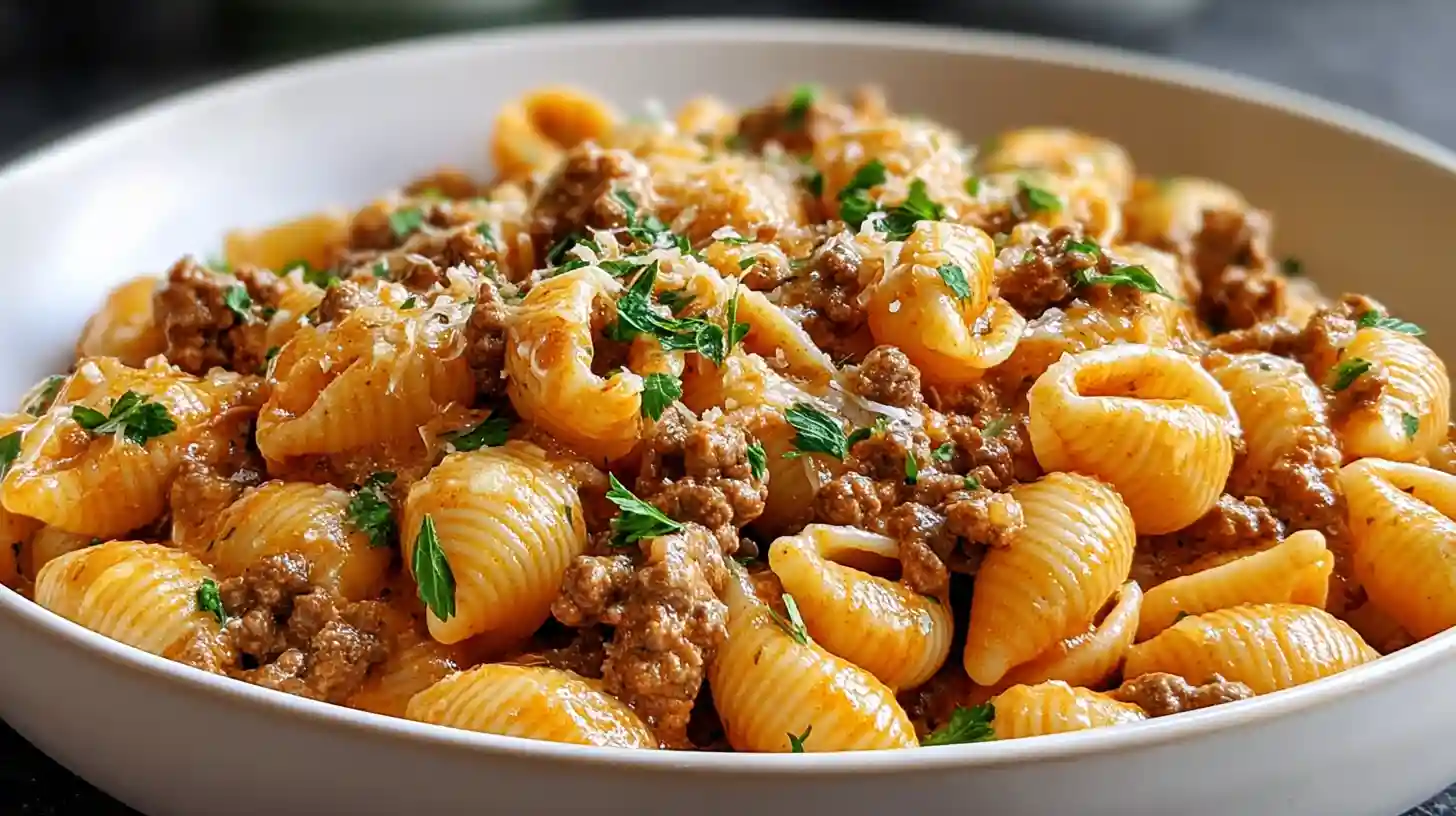
Creamy Beef and Shells
Ingredients
Equipment
Method
- Cook onion in olive oil 3 minutes. Brown and drain ground beef. Add garlic and tomato paste, cook 1 minute.
- Add tomatoes, broth, water, and all seasonings. Bring to a boil.
- Add uncooked shells. Cover and cook on medium 12 to 14 minutes, stirring every few minutes, until pasta is just tender.
- Reduce to low. Stir in cream and warm 1 minute without boiling.
- Add cheese in two additions, stirring between each until smooth and glossy. Adjust seasoning and serve with parsley.
Notes
- Reduce heat to low before adding cream and cheese to prevent a grainy sauce.
- Add cheese in two additions with stirring between – this ensures a smooth, even melt.
- Stir pasta every 3 to 4 minutes during cooking to prevent sticking on the bottom.
- If sauce is too thick after cheese melts, add a splash of broth and stir to loosen.
- Reheat leftovers with 3 to 4 tbsp broth stirred in to restore the sauce consistency.