
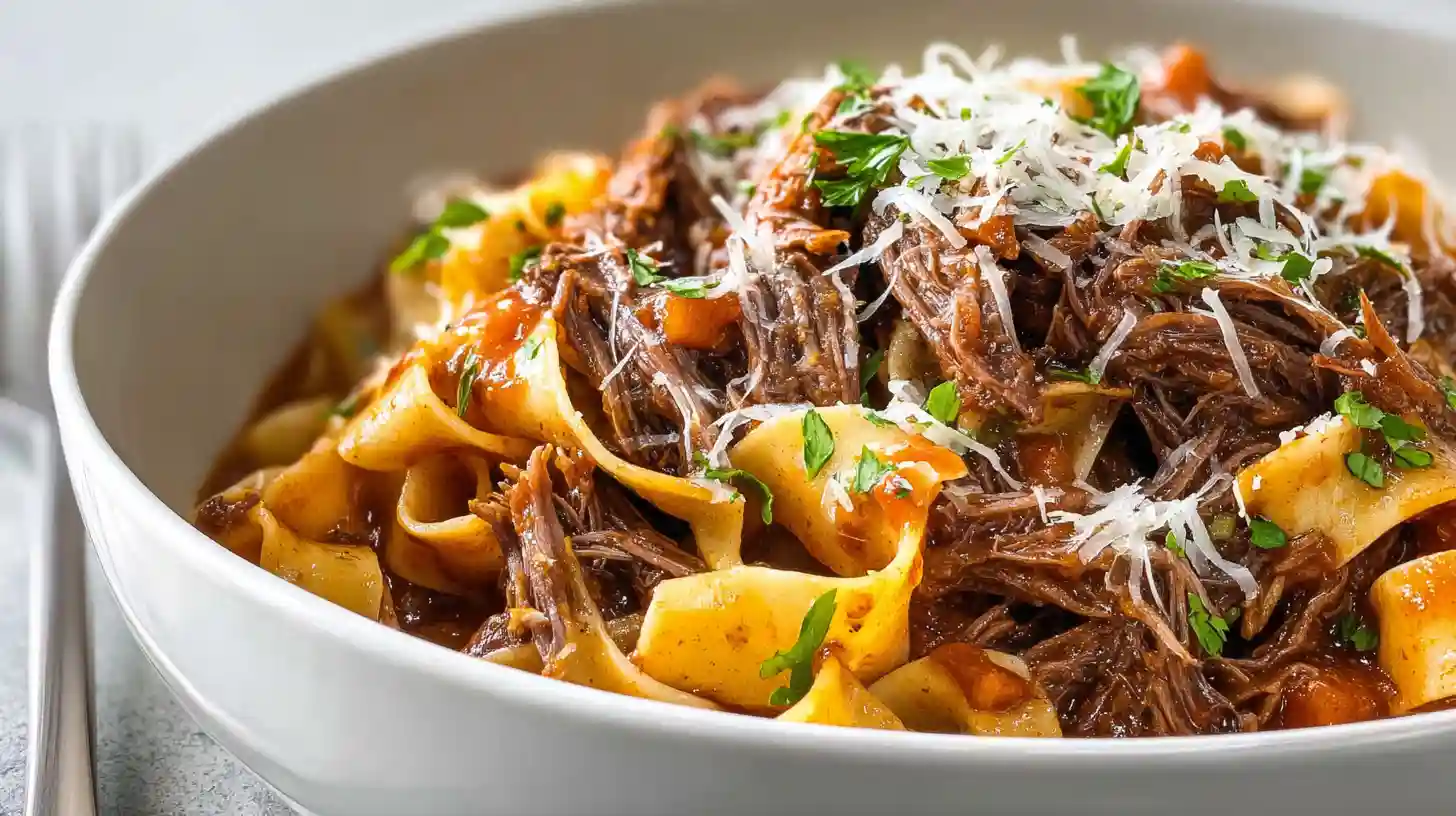
There is a particular satisfaction that comes from walking past the slow cooker mid-afternoon and catching the smell of a Slow Cooker Beef Ragu that has been quietly building flavor since morning. Chuck roast breaks down in a tomato and red wine base over 8 hours until it pulls apart into thick, saucy shreds that coat pasta in a way that jars of store-bought sauce will never replicate. The prep is minimal, the method is forgiving, and the result sits comfortably between a Sunday Italian-American ragu and something with the braised depth of a slow cooker pot roast. Pappardelle is the natural choice for serving but this works over polenta, mashed potatoes, or alongside crusty bread just as well.
The key detail that separates a flat, underwhelming slow cooker ragu from one with real depth is searing the beef before it goes in the pot. It takes ten minutes and the flavor difference carries all the way through to the finished sauce.
Slow Cooker Beef Ragu Ingredients
- 3 lbs beef chuck roast, trimmed of excess fat and cut into 3 large chunks
- 2 tbsp olive oil, for searing
- 1 tsp salt, plus more to taste
- 1 tsp black pepper
- 1 medium yellow onion, finely diced
- 5 garlic cloves, minced
- 2 medium carrots, finely diced
- 2 celery stalks, finely diced
- 1 can (28 oz) crushed tomatoes
- 1 can (6 oz) tomato paste
- 3/4 cup dry red wine, such as Cabernet Sauvignon or Chianti
- 1/2 cup beef broth
- 1 tsp dried oregano
- 1 tsp dried thyme
- 1 tsp smoked paprika
- 2 bay leaves
- Fresh basil and grated parmesan for serving
- Pappardelle or rigatoni pasta for serving
Building Depth Before the Slow Cooker Even Turns On
Pat the beef completely dry before searing. Any surface moisture on the meat turns immediately to steam in the hot pan and blocks the browning reaction that creates flavor. Season each chunk generously on all sides with salt and pepper right before they go into the hot oil. Sear over high heat for 3 to 4 minutes per side without moving them until each surface has a deep brown crust. This is not about cooking the beef through. It is about surface chemistry that adds a layer of roasted, caramelized flavor to the sauce that eight hours of slow cooking cannot produce on its own.
- Heat olive oil in a large heavy skillet over high heat until shimmering. Sear beef chunks in batches, 3 to 4 minutes per side until deeply browned on all surfaces. Transfer to the slow cooker.
- Reduce heat to medium. Add onion, carrots, and celery to the same skillet. Cook 4 to 5 minutes until softened and beginning to pick up color. Add garlic and cook 1 more minute.
- Pour red wine into the skillet and scrape up all browned bits from the bottom of the pan. Let it bubble for 1 minute, then add crushed tomatoes, tomato paste, and beef broth. Stir together and bring to a brief simmer.
- Pour the sauce over the beef in the slow cooker. Add oregano, thyme, smoked paprika, and bay leaves. The liquid should come about three-quarters up the beef chunks. Cover and cook on low for 8 to 9 hours, or on high for 4 to 5 hours.
- When the beef shreds easily with two forks pressed into it, remove the chunks to a cutting board. Shred coarsely into irregular pieces rather than fine strands. The uneven texture holds sauce better than uniformly pulled beef does. Return shredded beef to the slow cooker and stir into the sauce. Remove bay leaves. Taste and adjust salt.
- Cook pasta in heavily salted boiling water. Reserve 1/2 cup of pasta water before draining. Toss drained pasta with several large spoonfuls of ragu directly in the pot, adding pasta water a tablespoon at a time to loosen the sauce to a coating consistency. Serve in wide bowls with fresh basil and parmesan.
Ragu Too Thin or Too Thick – How to Fix Both
If the finished sauce looks watery after the beef is shredded and returned, remove the lid, switch the slow cooker to high, and cook uncovered for 20 to 30 minutes. The exposed surface allows evaporation and the sauce will reduce and concentrate. If the ragu is thicker than desired when tossing with pasta, the reserved pasta water is the fix. Add it a tablespoon at a time while tossing until the sauce loosens to the right coating consistency without becoming soupy. The starch in the pasta water also helps the sauce cling more effectively to the noodles than plain water would.
For a pot roast beef stroganoff-inspired variation of this ragu, stir 1/2 cup of sour cream into the finished shredded beef sauce off the heat just before serving. The sour cream adds a tangy creaminess to the tomato base that transforms the flavor profile toward something closer to a beef stroganoff slow cooker dish, and it works particularly well served over egg noodles rather than pappardelle.
Variations Worth Trying on the Second Batch
Mushrooms added during the last 2 hours of cooking contribute an earthy depth that reads almost meaty alongside the beef. Use cremini or porcini for the strongest flavor contribution. For a slow cooker pot roast beef stroganoff-style direction, swap the crushed tomatoes for 2 cups of beef broth, add 1 tablespoon of Worcestershire sauce, and finish with sour cream and egg noodles at the end. The base ragu method stays the same and the sauce pivots entirely in flavor without changing any of the timing or technique. Leftover pot roast beef stroganoff variations using pre-cooked pot roast instead of raw chuck follow the same slow cooker process but reduce the cook time to 3 to 4 hours on low since the beef is already cooked.
Storage and Using Leftovers Well
Refrigerate leftover ragu in an airtight container for up to 5 days. The sauce firms considerably when cold as the fat solidifies at the surface. Skim the fat layer off before reheating if a leaner sauce is preferred, or stir it back in for full richness. Reheat gently in a saucepan over medium-low heat with a splash of broth or water, stirring until loosened and hot throughout. The best slow cooker beef stroganoff and ragu recipes both benefit from being made a day ahead since the flavors develop and deepen overnight in the refrigerator. Freeze in portioned containers for up to 3 months. Thaw overnight and reheat on the stovetop. Leftover ragu makes an excellent base for a quick baked pasta or a filling for a savory hand pie if variety is needed from straight pasta nights.
FAQ
Can I skip the red wine in this recipe?
Yes. Replace the wine with an equal amount of beef broth and add 1 tablespoon of balsamic vinegar and 1 teaspoon of Worcestershire sauce to approximate the acidity and depth the wine provides. The sauce will be slightly less complex but still deeply flavored after 8 hours of slow cooking. If cooking for children or anyone who avoids alcohol entirely, this substitution produces a completely satisfying slow cooker beef ragu without any compromise in the overall richness of the finished dish. The balsamic and Worcestershire combination is the most effective non-alcohol way to replicate the layered background notes that dry red wine adds to a long-braised beef sauce.
What pasta shape works best with beef ragu?
Wide, flat pasta shapes hold shredded beef ragu better than thin or tubular ones. Pappardelle is the classic pairing because its broad surface area catches and holds the chunky sauce with every forkful. Tagliatelle is the second-best option and more widely available in standard grocery stores. Rigatoni works well if a shorter shape is preferred since the ridges and hollow tubes trap sauce inside and at the surface simultaneously. Thin pasta like spaghetti or linguine doesn’t hold chunky shredded beef sauces as effectively and the meat tends to slide off with each bite, which is why wide or ridged shapes are consistently recommended for this style of pot roast stroganoff recipe-adjacent beef ragu.
Can I use a different cut of beef?
Chuck roast is the best cut for this recipe because its marbling and collagen content break down into gelatin-rich tenderness over a long cook. Short ribs are an excellent upgrade, producing an even richer, more unctuous sauce but at a higher cost per pound. Brisket works and shreds well but produces a leaner, slightly less silky sauce than chuck. Avoid round roast or sirloin since both are too lean for the long cook time and produce dry, fibrous shreds rather than the tender, saucy beef the ragu depends on. For a how to make beef stroganoff in the slow cooker approach using the same base, chuck roast remains the correct cut for that variation as well.
Do I have to sear the beef first?
No, but the flavor will be noticeably less developed without it. Slow cooking alone produces tender beef but the sauce lacks the caramelized, roasted notes that searing adds through the Maillard reaction on the meat’s surface. The difference is most apparent in the broth depth, which tastes flat and one-dimensional without any searing compared to the richer, more layered sauce that starts with browned beef. If time is genuinely short on a busy morning, sear just the largest piece of beef rather than skipping entirely, which gives the sauce at least some of that browning flavor for the best slow cooker beef stroganoff or ragu result.
How do I know when the beef is ready to shred?
Press the tip of a fork into the thickest part of a chunk. If it slides in with almost no resistance and the meat visibly pulls apart along the grain under slight pressure, it is ready. If there is any springback or the meat feels bouncy rather than yielding, give it another 30 to 45 minutes on low and test again. Properly cooked chuck for a slow cooker beef ragu should essentially fall apart when you attempt to lift it with tongs, breaking into shreds under its own weight. Shredding too early produces chewy, stringy pieces that don’t fully absorb the surrounding sauce the way properly tender beef does after the full cook time.
Slow Cooker Beef Ragu
Ingredients
Equipment
Method
- Pat beef dry and season on all sides with salt and pepper. Sear in batches in hot olive oil over high heat, 3 to 4 minutes per side until deeply browned. Transfer to slow cooker.
- Cook onion, carrots, and celery in the same skillet over medium heat 4 to 5 minutes. Add garlic, cook 1 minute.
- Deglaze skillet with red wine, scraping up browned bits. Add crushed tomatoes, tomato paste, and beef broth. Stir and bring to a brief simmer. Pour over beef in slow cooker.
- Add oregano, thyme, smoked paprika, and bay leaves. Cover and cook on low 8 to 9 hours or high 4 to 5 hours until beef shreds easily.
- Remove beef to a cutting board and shred coarsely with two forks. Return to slow cooker, stir into sauce, remove bay leaves, and taste for salt.
- Cook pasta in heavily salted water, reserve 1/2 cup pasta water before draining. Toss pasta with ragu, adding pasta water as needed to coat. Serve with fresh basil and parmesan.
Notes
- Pat beef completely dry before searing – surface moisture prevents browning and the flavor difference is significant.
- Sear in batches without crowding the pan – crowded beef steams instead of browns.
- Deglaze the skillet and add those browned bits to the slow cooker – they carry concentrated flavor.
- Shred beef coarsely into irregular pieces, not fine strands – uneven texture holds sauce better with each forkful.
- Reserve pasta water before draining – the starch helps the sauce cling to the pasta when tossing.
- The ragu tastes even better the next day after the flavors have had time to fully develop overnight.