
Cantonese Chow Mein is the kind of meal that gives you crisp noodles, savory sauce, and just enough vegetables to keep every bite interesting. It is quick, practical, and satisfying without feeling heavy. If you want something that fits into Chinese cooking recipes without a long prep time, this is a good place to start.
The dish has a nice balance of soft and crisp textures, which is really the point of chow mein. Some noodles stay tender while the edges get lightly browned in the pan, and that contrast makes the whole plate more appealing. It also works well as one of those 30 minute meals that still feels like real cooking.
Cantonese Chow Mein Ingredients
- 8 oz chow mein noodles
- 2 tbsp vegetable oil
- 1 cup sliced cabbage
- 1/2 cup sliced carrots
- 1/2 cup sliced bell pepper
- 1/2 cup sliced onion
- 1 cup cooked chicken, shrimp, or tofu
- 2 cloves garlic, minced
- 2 tbsp soy sauce
- 1 tbsp oyster sauce
- 1 tsp sesame oil
- 1/4 tsp black pepper
- 2 green onions, sliced
Getting the Noodles Ready
Cook the noodles just until tender, then drain them well. If they sit too wet, they will steam instead of crisping in the pan. A quick toss with a little oil helps keep them separate, which matters when you want the noodles to brown evenly at the bottom of the skillet.
This step is easy to rush, but it does affect the final texture more than people expect. For an easy chow mein recipe, the noodle base should be dry enough to fry slightly and loose enough to toss without breaking apart. That middle ground is what gives Cantonese Chow Mein its signature feel.
How to Make Cantonese Chow Mein
- Cook the noodles according to package directions, then drain and set aside.
- Mix soy sauce, oyster sauce, sesame oil, and black pepper in a small bowl.
- Heat 1 tbsp oil in a large skillet or wok over medium-high heat.
- Add the cabbage, carrots, bell pepper, and onion, then cook for 2 to 3 minutes.
- Stir in the garlic and cooked protein, then cook for 1 minute more.
- Add the noodles and sauce, then toss well to coat.
- Push the noodles down gently so they can crisp in spots.
- Cook for 2 to 3 minutes without stirring too much.
- Turn the noodles once, add the remaining oil if needed, and cook another 1 to 2 minutes.
- Finish with sliced green onions and serve hot.
Pro Tips for Better Wok Texture
Use a wide pan if you do not have a wok. The main goal is surface area, because the noodles need room to make contact with the heat. Crowding the pan makes the dish soft instead of crisp, which is not ideal for this style of Chinese cooking.
Do not over-stir after the sauce goes in. Letting the noodles sit briefly in the hot pan is what creates those lightly browned spots people expect from chow mein. That little pause matters more than constant tossing, even if it feels unusual at first.
Variations and Ingredient Substitutions
Chicken, shrimp, tofu, or even a few strips of beef all work well here. If you want a vegetarian version, leave out the meat and add more cabbage or mushrooms for body. That flexibility makes this useful for petite cuisine style portions where you want a lighter dinner without much change to the method.
You can also add snap peas, bok choy, or bean sprouts near the end for a fresher bite. For a slightly sweeter profile, a small drizzle of honey can be added to the sauce. That is not traditional in every version, but it can work nicely alongside dishes like honey garlic chicken when you are building a broader meal.
Troubleshooting Common Problems
If the noodles clump together, they were probably not drained well enough or were left without enough oil before cooking. If the pan starts to feel wet, increase the heat slightly so the excess moisture cooks off. Dry heat is what keeps the texture closer to proper Cantonese chow mein.
If the sauce tastes flat, the noodles may need a little more soy sauce or a pinch of salt. Some brands vary a lot in saltiness, so tasting at the end is worth it. A small adjustment usually brings the whole dish into balance without changing the structure of the recipe.
Serving and Storage Notes
Serve Cantonese Chow Mein right away while the noodles still have some crispness. It works as a full meal on its own, but it also pairs well with stir-fried vegetables or a simple soup if you want a larger spread. Asian dishes like this usually taste best straight from the pan, not after sitting too long.
Store leftovers in an airtight container in the refrigerator for up to 3 days. Reheat them in a hot skillet rather than the microwave if you want to bring back some of the texture. The noodles will never be exactly the same as fresh, but they can still taste very good with a quick reheat.
FAQ
Can I use spaghetti instead of chow mein noodles?
Yes. Thin spaghetti works in a pinch, though the texture will be a little different.
Do I need a wok?
No. A large skillet works well if it has enough surface area.
Can I make this vegetarian?
Yes. Just skip the meat and add more vegetables or tofu.
Why are my noodles soft?
They may have been too wet after boiling or crowded in the pan while cooking.
Can I prepare the sauce ahead of time?
Yes. Mix the sauce ingredients ahead and keep them in a small bowl until you are ready to cook.
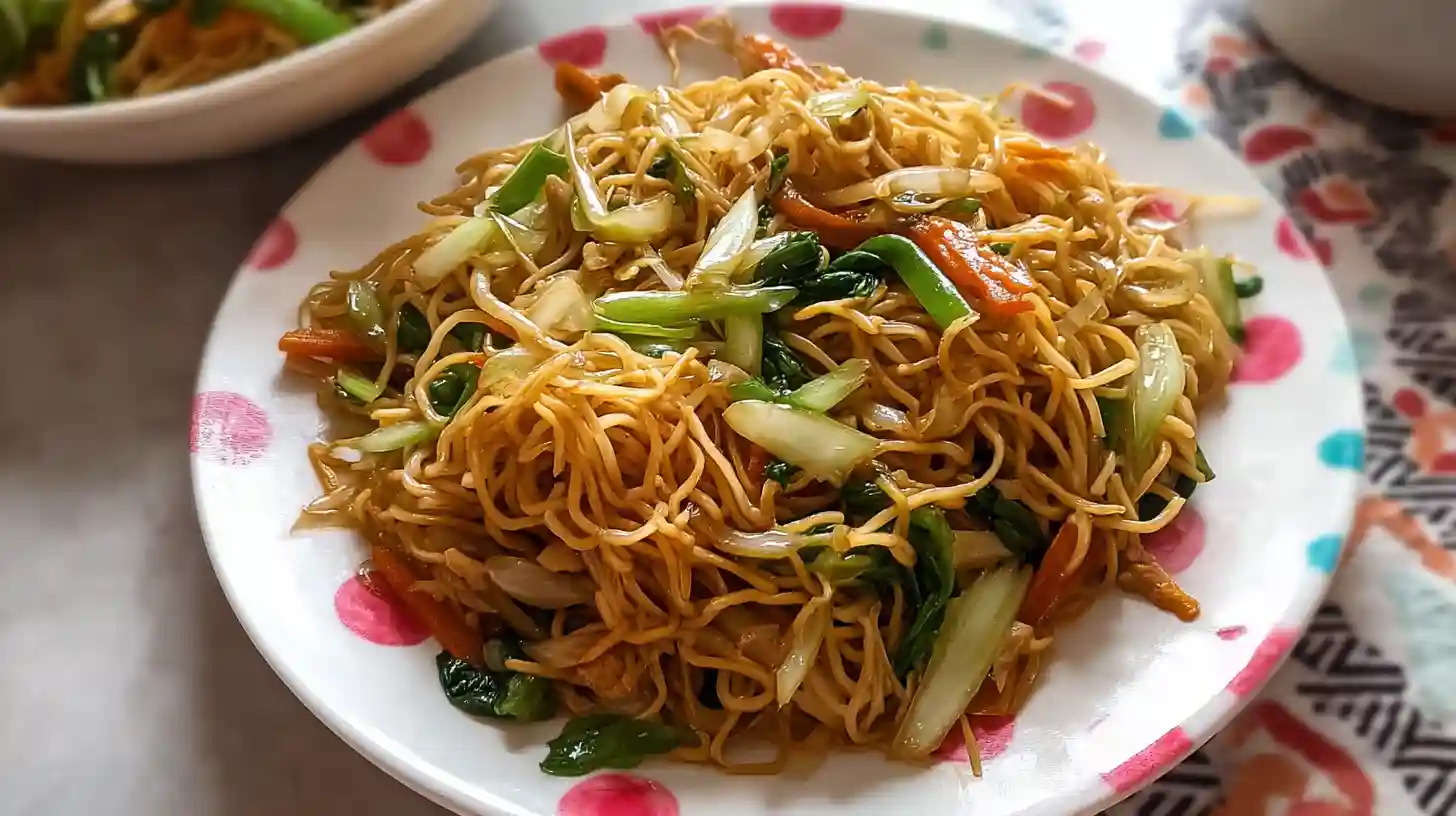
Cantonese Chow Mein
Ingredients
Equipment
Method
- Cook the noodles and drain well.
- Mix the sauce ingredients in a small bowl.
- Stir-fry the vegetables and protein, then add the noodles and sauce.
- Let the noodles crisp in spots before tossing again.
- Finish with green onions and serve hot.
Notes
- Drain noodles very well before frying.
- Do not overcrowd the pan.
- Let noodles sit briefly to create crisp spots.
- Reheat leftovers in a skillet for best texture.
- Adjust soy sauce to taste at the end.