

Fresh Homemade Glazed Donuts have a texture that feels almost weightless when done right. The outside carries a thin, slightly crisp glaze, while the inside stays soft and airy without feeling heavy. Getting that balance is less about complicated steps and more about paying attention to the dough as it develops.
The process takes a bit of patience, especially during rising, but each step builds toward that classic result. Once you try it, it becomes one of those easy baking recipes that feels surprisingly approachable, even if it looks like something straight from a bakery.
Homemade Glazed Donuts Ingredients
- 2 1/4 tsp active dry yeast
- 3/4 cup warm milk
- 1/4 cup granulated sugar
- 2 1/2 cups all-purpose flour
- 1/2 tsp salt
- 2 tbsp unsalted butter, softened
- 1 large egg
- Oil for frying
- 1 1/2 cups powdered sugar
- 3 tbsp milk, for glaze
- 1/2 tsp vanilla extract
Making Homemade Glazed Donuts Step by Step
Start by activating the yeast properly. The milk should feel warm to the touch, not hot, since high heat can stop the yeast from working. Once foamy, it shows the yeast is active and ready to help the dough rise.
- Mix warm milk, yeast, and a small amount of sugar. Let sit until foamy.
- Add remaining sugar, egg, butter, flour, and salt. Mix until dough forms.
- Knead for 8 to 10 minutes until smooth and slightly elastic.
- Place in a greased bowl, cover, and let rise until doubled.
- Roll dough to about 1/2 inch thick and cut into donut shapes.
- Let shaped donuts rise again for 25 to 30 minutes.
- Heat oil to 350°F and fry donuts until golden on both sides.
- Drain on paper towels, then dip into glaze while slightly warm.
The second rise is often overlooked, but it makes a noticeable difference. Without it, the donuts tend to stay tight and slightly dense instead of light and airy, which is key in tasty baking like this.
Texture Secrets That Make a Difference
The dough should feel soft and slightly tacky, but not sticky enough to cling heavily. Adding too much flour during kneading creates a heavier donut, which takes away from the light structure you want. It is better to work with slightly soft dough than to over-correct it.
Oil temperature plays a big role too. Keeping it steady helps cook the donuts evenly. This is one of those small details that separates average results from truly delicious snacks recipes that feel bakery-quality.
Flavor Twists and Creative Options
Once the base is mastered, it becomes easy to adapt. A simple vanilla glaze works well, but adding citrus zest gives a lighter finish. Chocolate glaze or even a maple version can turn this into multiple sweet dishes recipes without changing the dough itself.
Filling the donuts with jam or cream changes them into something closer to café food. The method stays the same, just pipe the filling in after frying and cooling slightly.
Common Problems and Fixes
If the donuts absorb too much oil, the temperature is likely too low. Always test with a small piece of dough first. If they brown too fast, reduce heat slightly and allow the inside more time to cook through.
Glaze that looks dull or uneven usually means it was applied when the donuts were too hot or too cool. Slightly warm donuts allow the glaze to settle evenly and set with a light shine.
Serving and Storage Suggestions
These donuts are best enjoyed within a few hours of making them, when the texture is at its peak. If storing, keep them in a sealed container at room temperature for up to 2 days. Reheating briefly helps bring back some softness.
They also fit well into fun easy recipes for gatherings, especially when served alongside coffee. While simple, they carry that bakery-style finish often seen in food videos cooking content and dessert ideen inspiration.
FAQ
Can I bake these donuts instead of frying?
Yes, but they will have a softer, more bread-like texture rather than the classic fried finish.
Why are my donuts dense?
This often means the dough did not rise enough or too much flour was added during kneading.
Can I make the dough ahead?
Yes. After the first rise, refrigerate overnight and bring to room temperature before shaping.
What is the best oil for frying?
Neutral oils like vegetable or canola oil are ideal because they do not affect flavor.
How do I get a smooth glaze?
Whisk the glaze until fully smooth and dip donuts while slightly warm for an even coating.
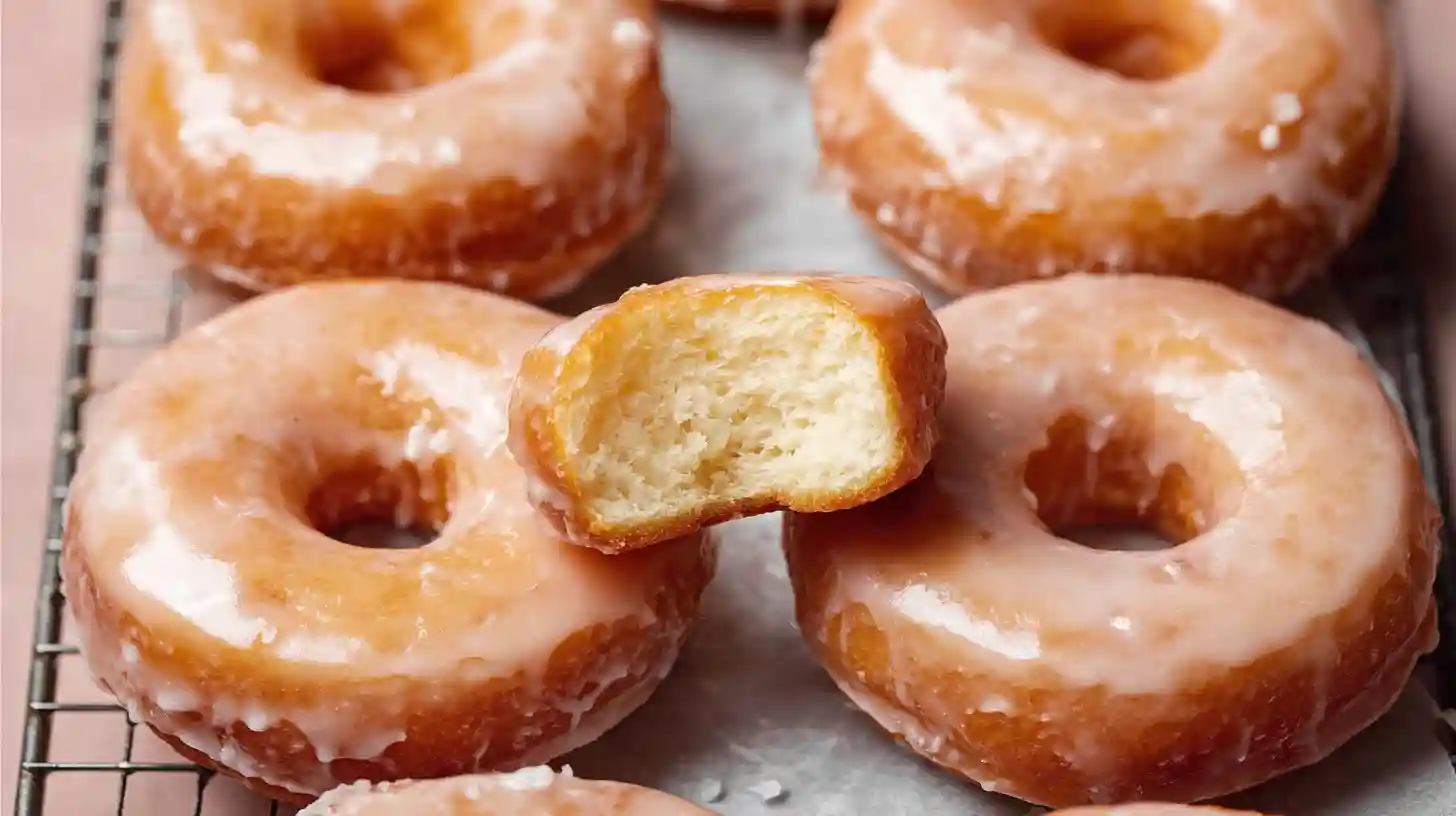
Homemade Glazed Donuts
Ingredients
Equipment
Method
- Activate yeast in warm milk and sugar.
- Mix ingredients and knead dough until smooth.
- Let dough rise until doubled.
- Shape donuts and let rise again.
- Fry at 350°F until golden, then glaze.
Notes
- Do not overheat milk when activating yeast.
- Keep oil temperature steady.
- Let donuts cool slightly before glazing.
- Use fresh yeast for best rise.
- Best eaten fresh.