

Sugar cookies are already hard to argue with, but this version takes the concept somewhere more interesting. Pineapple Upside Down Sugar Cookies That Delight Every Bite combine a thick, soft buttery cookie base with a caramelized pineapple ring and a maraschino cherry pressed into a brown sugar glaze on top, reproducing every element of the classic upside down cake in individual handheld form. The pineapple caramelizes slightly against the cookie surface as it bakes, the glaze seeps into the edges, and the result is a yummy sweets option that looks far more involved than it actually is to make.
The cookie base is thicker and softer than a standard rolled sugar cookie, closer to a chewy bakery-style disc that can support the weight of the pineapple topping without going limp or losing its shape after baking. Getting that thickness right is the one detail worth paying attention to during shaping.
Pineapple Upside Down Sugar Cookies Ingredients
The Cookie Base
- 2.5 cups all-purpose flour
- 3/4 tsp baking powder
- 1/4 tsp baking soda
- 1/2 tsp fine salt
- 1 cup unsalted butter, softened to room temperature
- 3/4 cup granulated sugar
- 1/4 cup light brown sugar, packed
- 1 large egg plus 1 egg yolk, room temperature
- 2 tsp vanilla extract
- 1 tbsp sour cream or cream cheese, softened
The Pineapple Topping
- 1 can (20 oz) pineapple rings in juice, drained and patted dry
- 1/4 cup light brown sugar, packed
- 2 tbsp unsalted butter, melted
- 1/4 tsp ground cinnamon
- 12 to 14 maraschino cherries, stems removed and patted dry
How to Make Pineapple Upside Down Sugar Cookies That Delight Every Bite
Drying the pineapple rings thoroughly before placing them on the cookie dough is the step that separates a clean, caramelized result from a soggy one. Canned pineapple holds significant juice even after draining, and that moisture releases directly onto the cookie surface during baking, preventing the brown sugar glaze from setting properly and making the center of the cookie wet and underbaked. After draining, press each ring between two layers of paper towels and let them sit for at least 5 minutes before using. The drier the surface, the better the caramelization and the crisper the glaze edges on the finished cookie desserts.
- Whisk together flour, baking powder, baking soda, and salt in a medium bowl. Set aside.
- Beat softened butter with granulated sugar and brown sugar in a stand mixer fitted with the paddle attachment on medium speed for 3 to 4 minutes until light and fluffy. Add the whole egg and yolk and beat 30 seconds each. Add vanilla and sour cream and mix until combined. The sour cream adds a slight tang and keeps the crumb tender without spreading the cookie too thin during baking.
- Add flour mixture and mix on low until just combined and no streaks of flour remain. Do not overmix. Cover the bowl with plastic wrap and refrigerate the dough for 30 minutes. Chilled dough holds its shape better during baking and prevents the cookies from spreading flat, which would make them too thin to support the pineapple topping properly.
- Preheat oven to 350°F. Line two baking sheets with parchment paper. Mix melted butter, brown sugar, and cinnamon together in a small bowl for the glaze topping. Scoop chilled dough into balls about 2 inches in diameter, roughly 3 tablespoons each. Place on the prepared baking sheets spaced 2.5 inches apart. Flatten each ball gently with the bottom of a glass or measuring cup to about 3/4 inch thickness. The edges should be smooth without cracks.
- Spoon about half a teaspoon of the brown sugar butter mixture onto the center of each flattened dough disc and spread lightly with the back of the spoon to cover the surface without going to the very edges. Press one dry pineapple ring gently but firmly onto each cookie, centered. Press a single maraschino cherry, patted completely dry, into the center hole of each pineapple ring. Spoon a small amount of remaining brown sugar glaze over the top of the pineapple ring.
- Bake at 350°F for 12 to 15 minutes until the edges of the cookies are set and very lightly golden. The centers will look slightly underdone, which is correct. They firm up as they cool on the pan. Do not overbake since the cookies continue cooking from residual heat after removal and an overbaked pineapple upside down cookie loses its soft chewy interior texture entirely.
- Cool on the baking sheet for 10 minutes before transferring to a wire rack. The glaze sets as the cookies cool and the pineapple adheres to the surface. Moving them too early risks the topping sliding off before the glaze has set.
Troubleshooting Spread and Soggy Centers
Cookies that spread too thin during baking almost always trace back to butter that was too soft or dough that wasn’t chilled before baking. Softened butter for creaming should be around 65°F, cool enough to hold a fingerprint when pressed but not greasy or shiny on the surface. If the butter was very soft or the kitchen is warm, extend the dough chill time to 45 minutes rather than 30. Soggy cookie centers after baking are almost exclusively caused by wet pineapple rings. Even a small amount of residual juice from the can releases enough steam against the dough to prevent the center from setting correctly. The paper towel pressing step is not optional for eat dessert results that look as good as they taste.
Variations and Swaps for Baking Sweets Creativity
Fresh pineapple works in place of canned with better caramelization and a slightly more tart flavor. Cut 1/4-inch rings from a fresh pineapple and use a small round cutter or paring knife to remove the core, creating the center hole for the cherry. Fresh rings need no additional drying since they don’t carry the same moisture level as canned. For a tropical baking sweets variation, add 1/4 teaspoon of coconut extract to the cookie dough and press a small amount of toasted shredded coconut into the brown sugar glaze on each cookie before baking. The coconut toasts to a golden color during baking and adds a chewy, fragrant element alongside the pineapple sugar caramel notes in the finished cookie.
Storing These Cookies Without Losing the Texture
Store cooled cookies in a single layer in an airtight container at room temperature for up to 3 days. Stacking these cookies is not recommended since the pineapple topping transfers moisture to the cookie surface beneath it overnight, softening the glaze and making both cookies sticky. If stacking is necessary for storage, place a sheet of parchment paper between each layer. These pineapple upside down cookies do not freeze particularly well once fully assembled since the pineapple becomes waterlogged after thawing. For how sweet eats make-ahead prep, freeze the unbaked cookie dough balls without the topping for up to 2 months. Thaw overnight in the refrigerator, flatten, add the pineapple topping, and bake directly from chilled with no change to the bake time or temperature.
FAQ
Can I use fresh pineapple instead of canned?
Yes, and it often produces a better caramelized result since fresh pineapple rings have less surface moisture than canned and contain natural sugars that brown more readily against the brown sugar glaze. Cut rings about 1/4 inch thick from a peeled fresh pineapple and use a small round cutter to remove the core center for the cherry placement. No drying step is needed with fresh pineapple. The flavor is slightly more tart and complex than canned, which contrasts nicely with the sweet buttery pineapple sugar base of the cookie. If fresh pineapple is unavailable or out of season, canned in juice rather than syrup is the best substitute since syrup-packed pineapple adds excess sweetness that makes the finished pineapple upside down sugar cookies taste cloying rather than balanced.
Why did my pineapple ring slide off the cookie after baking?
Two causes are most common. The first is moving the cookies from the baking sheet before the glaze has set. The brown sugar butter mixture needs the full 10-minute cool time on the pan to firm from a liquid into a sticky, tacky glaze that anchors the pineapple to the cookie surface. The second cause is pressing the pineapple onto dough that was too warm before baking, which means the ring sits on the surface rather than pressing into slightly resistant chilled dough. Keeping the dough cold before assembly gives the pineapple a better grip from the start, and the glaze locks it in place as the cookie bakes and cools. These pineapple upside down cookies that delight every bite need both the chill step and the full cooling time to hold together properly.
Can I make these without maraschino cherries?
Yes. The cherry is traditional in upside down cake styling and adds visual contrast but is not essential to the flavor of the cookie. Fresh Bing cherries, dried cherries soaked briefly in warm water until plump, or even a small piece of candied ginger pressed into the center hole work as alternatives. For a version without any cherry at all, the pineapple ring centered on the glaze looks complete on its own and the cookie desserts presentation remains attractive without the red center. If using fresh cherries, pit them first and pat completely dry since any juice from the cherry will pool in the center hole of the pineapple and prevent the center from baking through cleanly.
How do I get a thicker, bakery-style cookie base?
Three things contribute to a thick cookie that holds the pineapple topping without going flat. First, the dough must be chilled for at least 30 minutes before shaping and baking. Second, the dough balls should be generous, about 3 tablespoons each, before flattening to 3/4 inch thickness. Thinner discs spread too much and lose the structural height needed to carry the topping. Third, the extra egg yolk in this recipe adds fat without extra moisture, which strengthens the cookie structure and contributes to the chewy, dense center texture that makes these pineapple upside sugar cookies worth making over a thinner, crispier standard sugar cookie base.
Can I make the dough ahead of time?
Yes. The cookie dough keeps well in the refrigerator for up to 3 days, tightly covered. The extended chill actually improves the flavor slightly as the butter and vanilla have more time to develop in the dough. Remove the dough from the refrigerator 10 minutes before shaping since very cold dough is stiff and may crack at the edges when flattened. Allow the shaped dough discs to sit at room temperature for 5 minutes before adding the pineapple topping and baking, which ensures the surface is pliable enough for the ring to press in cleanly. For the best baking sweets planning, the dough and the topping mixture can both be prepped the night before and the assembly and baking finished fresh the following day.
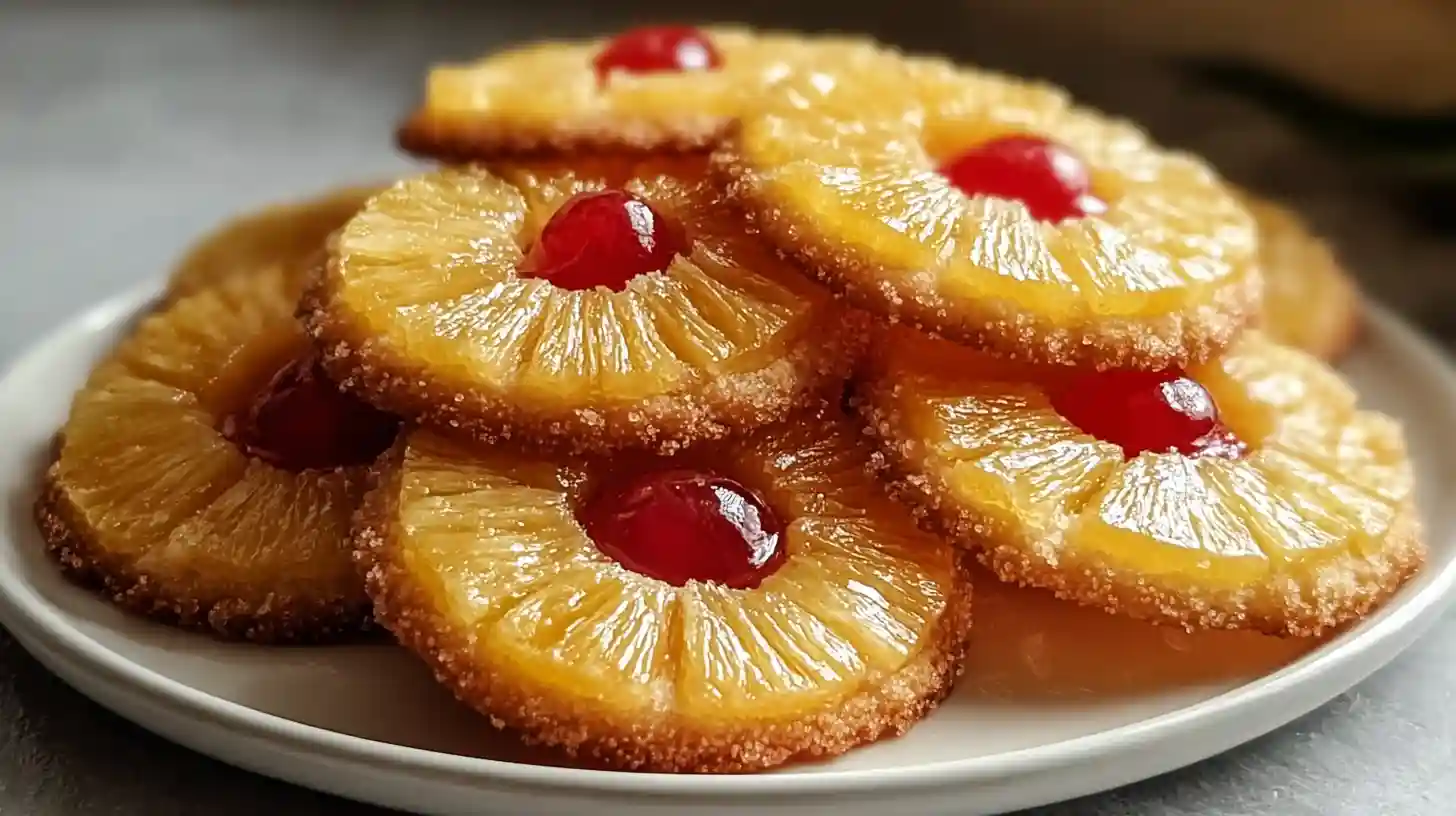
Pineapple Upside Down Sugar Cookies That Delight Every Bite
Ingredients
Equipment
Method
- Whisk flour, baking powder, baking soda, and salt together. Set aside.
- Beat butter with both sugars 3 to 4 minutes until fluffy. Add egg and yolk, beat 30 seconds each. Add vanilla and sour cream, mix to combine.
- Add flour mixture and mix on low until just combined. Cover and refrigerate dough 30 minutes.
- Preheat oven to 350°F. Line baking sheets with parchment. Mix melted butter, brown sugar, and cinnamon for the glaze topping. Scoop dough into 3-tbsp balls, flatten to 3/4 inch thickness on prepared sheets.
- Spread a small amount of brown sugar glaze on each disc. Press one dry pineapple ring onto each cookie. Press one dry cherry into the center hole. Spoon remaining glaze over the pineapple.
- Bake 12 to 15 minutes until edges are set and very lightly golden. Centers will look slightly underdone. Cool on the pan 10 minutes before transferring to a wire rack.
Notes
- Pat pineapple rings very dry between paper towels before using – residual juice causes soggy centers and prevents the glaze from setting.
- Chill dough 30 minutes minimum before baking – this prevents spreading and keeps the cookies thick enough to hold the topping.
- Do not overbake – edges set but centers looking soft is correct, they firm completely as they cool on the pan.
- Cool fully on the baking sheet before moving – the glaze needs 10 minutes to set and anchor the pineapple to the cookie surface.
- Store in a single layer only – stacking transfers moisture from the pineapple onto the cookie below and softens the glaze.