

There is a specific kind of guacamole that gets made tableside at certain Mexican restaurants, right in front of you in a stone bowl, and it never quite tastes the same when you try to recreate it at home. Guac Cart Guacamole is the recipe that closes that gap. Ripe avocados, the right amount of acid, fresh aromatics, and a technique that keeps some texture rather than mashing everything smooth. It takes about 15 minutes and the ingredient list is short enough to memorize after making it once. This is genuinely the best guacamole recipe for anyone who wants that fresh, bright, restaurant-quality result without a trip anywhere.
Avocado ripeness is the single variable that determines whether this works or doesn’t. A perfectly ripe avocado mashes to a creamy, buttery consistency that holds lime juice and seasoning in a way that an underripe one never will. Check by pressing the skin gently at the stem end. It should give slightly under light pressure without feeling mushy or hollow.
Guac Cart Guacamole Ingredients
- 3 large ripe Hass avocados
- 2 tbsp fresh lime juice, from about 1.5 limes, plus more to taste
- 1/2 tsp fine salt, plus more to taste
- 1/4 cup white or red onion, finely diced, about half a small onion
- 1 jalapeño, seeds and ribs removed for mild heat, finely minced
- 1/4 cup fresh cilantro leaves and tender stems, roughly chopped
- 1 medium Roma tomato, seeds removed, finely diced
- 1 small garlic clove, finely minced or grated, optional
- 1/4 tsp ground cumin, optional
How to Make Guac Cart Guacamole With the Right Texture
The onion step is worth doing first. Place the diced onion in a small bowl, cover with cold water, and let it soak for 5 minutes before draining and patting dry. This brief soak draws out the sharp, harsh sulfur compounds that make raw onion overwhelming in a fresh dip, leaving behind a milder, sweeter onion flavor that complements rather than dominates the avocado. It’s a small thing that makes a noticeable difference, especially when the guacamole is being eaten immediately rather than sitting for an hour where the raw onion flavor would otherwise mellow on its own.
- Halve avocados lengthwise, remove the pits, and scoop the flesh into a wide bowl or molcajete. Add lime juice and salt immediately. The acid from the lime slows oxidation and starts seasoning the avocado at the base level before any other ingredients are added.
- Mash the avocado with a fork to your preferred texture. For chunky guacamole, stop when roughly half the avocado is still in visible pieces. For a creamier result, mash until only a few small chunks remain. Avoid using a blender or food processor since both produce an airy, pale, mousse-like texture that is far from the best guacamole recipe result this method achieves.
- Add the drained diced onion, minced jalapeño, chopped cilantro, and diced tomato. For the tomato, removing the seeds and watery core before dicing is important. Seedy tomato releases liquid into the guacamole as it sits and makes the texture watery and loose within minutes of serving. Dice the tomato flesh only.
- Add garlic and cumin if using. Fold everything together gently with the fork, using four to five folds rather than stirring vigorously. Overmixing breaks down the remaining avocado chunks and produces a uniform paste rather than a textured dip.
- Taste and adjust. Add more lime juice if it needs brightness, more salt if the flavor seems flat, or more jalapeño if more heat is wanted. A flat-tasting guacamole almost always just needs more salt and lime rather than more of any other ingredient. Season carefully in small increments since both salt and lime are easy to over-add at this stage.
Keeping Guacamole Green Longer
Avocado browns from oxidation, the reaction between the exposed flesh and air. Lime juice slows this significantly but doesn’t stop it entirely. The most effective storage method is pressing plastic wrap directly against the surface of the guacamole, removing every air pocket between the wrap and the dip before sealing the container. The avocado pit placed in the bowl is a common suggestion but only protects the area it covers. The plastic wrap contact method works across the entire surface. For healthy homemade recipes that need to stay vibrant for a few hours before serving, this is the most reliable approach without adding extra ingredients or changing the flavor of the dip.
Variations and Quick Recipes Snack Uses
For a smoky variation that works well as a quick recipes snacks board element, add 1/4 teaspoon of chipotle powder or a finely minced chipotle pepper in adobo sauce to the base recipe. The smoke and mild heat from the chipotle layer underneath the fresh cilantro and lime in a way that feels different from standard spiced guacamole. For a mango variation that leans tropical, replace the tomato with an equal amount of finely diced ripe mango. The sweetness of the mango cuts through the jalapeño heat and works particularly well served alongside grilled fish or shrimp rather than chips alone. Both variations keep the same base ratios and technique as the guacamole recipe above.
Serving and Storing Leftovers
Guac Cart Guacamole is best served within 2 hours of making it for peak color and texture. If making ahead, prepare the avocado base with lime and salt only, cover tightly with plastic wrap pressed to the surface, and refrigerate for up to 4 hours. Fold in the remaining fresh ingredients just before serving so the cilantro, tomato, and onion are at their freshest. Leftover guacamole stores in the refrigerator for up to 2 days with the plastic wrap contact method. The top layer may brown slightly even with good storage, which is normal and purely cosmetic. Scrape off the oxidized top layer and the guacamole beneath will still be bright green and fully flavorful. Serve leftovers over eggs, spread on toast, or stirred into a quick recipes snacks bowl with rice and beans for a simple meal that uses up every last bit without waste.
FAQ
What type of avocado makes the best guacamole?
Hass avocados are the standard choice for guacamole recipe applications because their flesh is richer, creamier, and more buttery than larger Florida avocados, which have a higher water content and a less intensely flavored, somewhat watery texture when mashed. A ripe Hass avocado has dark, almost black skin with a slight give under gentle pressure at the stem end. The flesh inside should be pale green with no gray or brown discoloration. One ripe Hass avocado mashes to about 1/2 cup of flesh, which means three avocados in this recipe produces approximately 1.5 cups of guacamole base before the other ingredients are added, enough for 4 to 6 servings as a shared dip.
Can I make guacamole without cilantro?
Yes. Cilantro has a distinctive flavor that some people find unpleasant due to a genetic sensitivity that makes it taste soapy. Leaving it out entirely still produces a balanced and delicious guac cart guacamole since the lime, onion, jalapeño, and salt carry the flavor profile on their own. Fresh flat-leaf parsley is the most neutral replacement if some fresh herb element is wanted without the cilantro flavor. Use the same quantity as the cilantro called for and chop it similarly. The flavor of the finished guacamole is slightly more subdued without cilantro but still bright and well-seasoned with the same base technique.
How do I ripen avocados quickly?
Place firm avocados in a paper bag with a banana or apple and fold the top closed. Both fruits emit ethylene gas as they ripen, which accelerates the ripening process in the avocados around them. At room temperature, this method typically ripens a firm avocado in 1 to 2 days rather than the 3 to 5 days it would take sitting on the counter alone. Check daily by pressing the stem end gently. Once it gives slightly under light pressure without the skin cracking or the flesh feeling hollow, the avocado is ready for this best guacamole recipe. Do not refrigerate unripe avocados since cold temperatures halt the ripening process entirely and the avocado will not soften at refrigerator temperature regardless of how long it sits there.
Is it necessary to remove the tomato seeds?
Yes, strongly recommended. The seeds and surrounding gel of a tomato contain the majority of the fruit’s water content, and adding them to guacamole introduces liquid that dilutes the avocado base and makes the dip watery and loose within minutes of serving. Cut the tomato into quarters, squeeze each quarter gently over a sink to release the seeds and gel, then dice only the firm flesh that remains. This step adds 60 seconds of prep and makes a measurable difference in the texture of the finished guacamole, particularly when it’s being served at a table over a period of time rather than eaten immediately. Watery guacamole is one of the most common complaints with homemade versions and removing the tomato seeds is the direct fix.
How spicy is this guacamole?
With seeds and ribs removed from the jalapeño, this recipe produces a mild heat level that most adults find comfortable. The white ribs inside a jalapeño carry the majority of the capsaicin, not the flesh, so removing them dramatically reduces the spice. For a spicier result, leave some of the ribs in or add half a serrano pepper in place of the jalapeño since serranos carry more heat at the same size. For a completely mild version suited for guests with low spice tolerance, omit the jalapeño entirely and add a small pinch of mild chili powder for color and a subtle warmth that doesn’t build into noticeable heat. The quick cooking recipes principle here is simple: control the jalapeño and you control the heat of the entire dip.
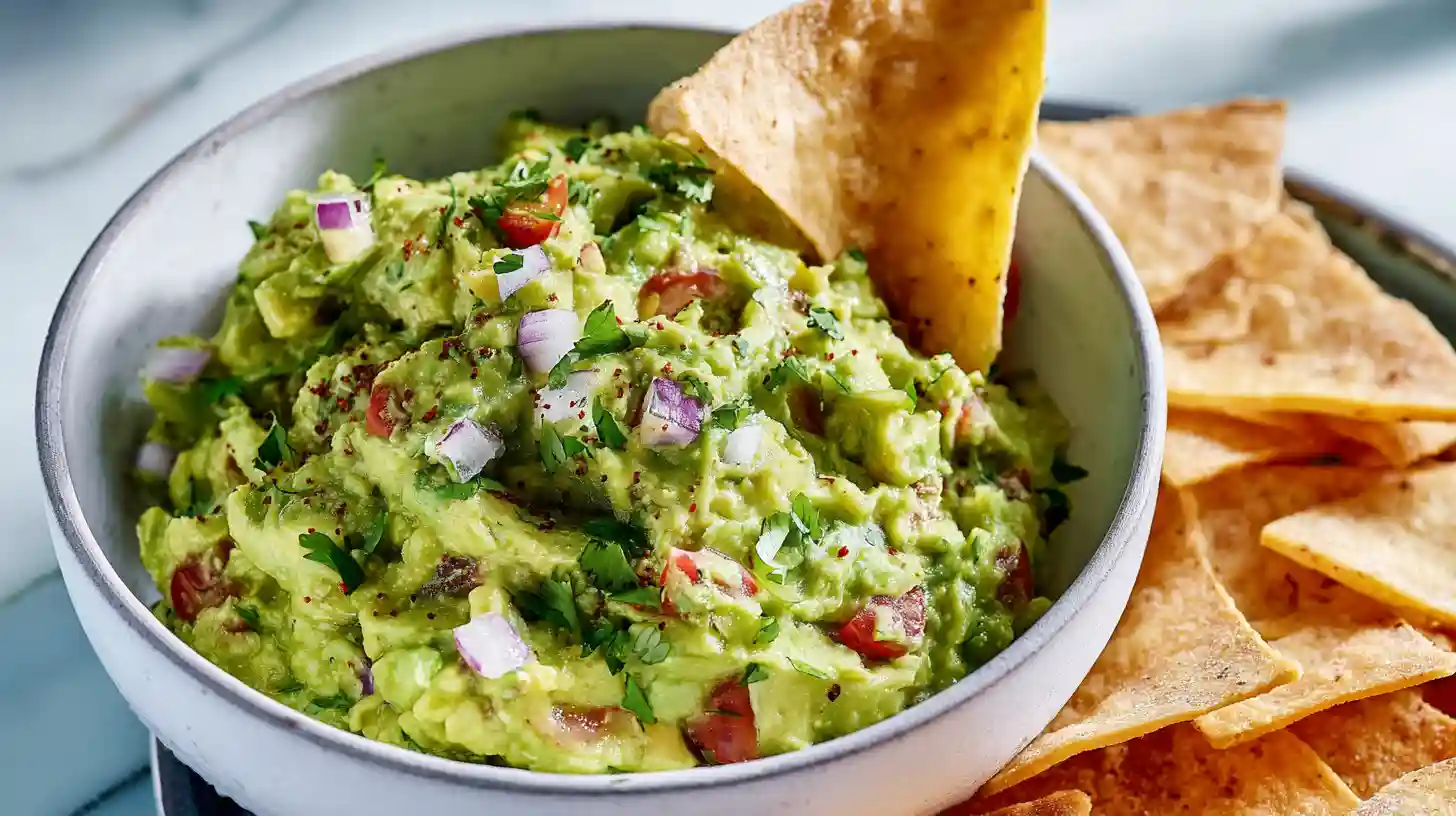
Guac Cart Guacamole
Ingredients
Equipment
Method
- Soak diced onion in cold water for 5 minutes. Drain and pat dry. Set aside.
- Halve avocados, remove pits, and scoop flesh into a wide bowl. Add lime juice and salt immediately.
- Mash with a fork to your preferred texture, leaving chunks for a rustic result or mashing further for creamier guacamole.
- Add drained onion, jalapeño, cilantro, seeded tomato, and optional garlic and cumin. Fold gently with 4 to 5 folds only.
- Taste and adjust with more lime juice or salt as needed. Serve immediately or press plastic wrap directly against the surface and refrigerate up to 2 hours before serving.
Notes
- Soak diced onion in cold water before adding – this removes harsh sulfur compounds and leaves a milder, sweeter onion flavor.
- Remove tomato seeds before dicing – the seeds release water that makes the guacamole watery and loose within minutes.
- Do not use a blender – fork mashing preserves the chunky texture that defines good guacamole.
- Press plastic wrap directly against the guacamole surface for storage – this removes air contact and prevents browning more effectively than any other method.
- A flat-tasting guacamole almost always needs more salt and lime – add in small increments and taste between each addition.