

Peaches and brown sugar belong together in a way that feels almost obvious once you taste it. The molasses depth in brown sugar pulls out the stone fruit sweetness of peaches more than white sugar ever does, and that’s the entire logic behind this Brown Sugar Peach Cake. Fresh summer peaches folded into a tender butter cake, baked until the fruit softens into the crumb, then finished with a thick brown sugar frosting that sets up smooth and slightly fudgy. It is a cake that looks generous and tastes exactly like that too, without asking for anything particularly complicated from whoever bakes it.
Fresh peaches give the best result when they’re in season. Canned peaches in juice, drained well, work reliably the rest of the year and produce a cake that is nearly identical in texture. What matters most is keeping excess moisture out of the batter so the cake structure stays intact through baking.
Brown Sugar Peach Cake Ingredients
The Cake
- 2.5 cups all-purpose flour
- 1 cup packed light brown sugar
- 1/2 cup granulated white sugar
- 1 cup unsalted butter, softened to room temperature
- 3 large eggs, room temperature
- 3/4 cup whole buttermilk, room temperature
- 1/3 cup sour cream
- 2 tsp vanilla extract
- 1.5 tsp baking powder
- 1/2 tsp baking soda
- 1/2 tsp fine salt
- 1/2 tsp ground cinnamon
- 1/4 tsp ground nutmeg
- 1.5 cups fresh peaches, peeled and diced into 1/2-inch pieces, about 2 medium peaches, or canned peaches well drained and patted dry
- 1 tbsp all-purpose flour, for tossing with the peaches
The Brown Sugar Frosting
- 1 cup unsalted butter
- 2 cups packed light brown sugar
- 1/2 cup heavy cream, plus 1 to 2 tbsp more if needed
- 3 to 3.5 cups powdered sugar, sifted
- 1 tsp vanilla extract
- 1/4 tsp fine salt
Baking and Frosting the Brown Sugar Peach Cake
Room temperature butter, eggs, and buttermilk are not optional suggestions here. Cold butter doesn’t cream properly with sugar and produces a dense, uneven cake crumb rather than the light, tender texture this recipe is built around. Pull all refrigerator ingredients out at least 45 minutes before starting. Tossing the diced peaches in a tablespoon of flour before folding them into the batter is a small step that makes a measurable difference. The flour coating absorbs some of the juice the peaches release during mixing and prevents the fruit from sinking to the bottom of the cake during baking.
- Preheat oven to 350°F. Grease two 9-inch round cake pans and line the bottoms with parchment paper. Grease the parchment as well. Set aside.
- Whisk together flour, baking powder, baking soda, salt, cinnamon, and nutmeg in a medium bowl. Set aside.
- Beat softened butter with brown sugar and granulated sugar in a stand mixer fitted with the paddle attachment on medium speed for 4 to 5 minutes until very light and noticeably fluffy. The mixture should look pale tan and airy rather than dense and paste-like. This creaming stage is where the cake’s texture is built.
- Add eggs one at a time, beating for 30 seconds after each addition. Scrape the bowl down between additions. Add vanilla and mix briefly to combine.
- Add sour cream and mix on low until just incorporated. The batter may look slightly curdled at this stage, which resolves once the flour is added.
- Add flour mixture in three additions, alternating with buttermilk in two additions, beginning and ending with flour. Mix on low speed only, stopping as soon as each addition disappears. Overmixing the batter after the flour goes in develops too much gluten and makes the cake tough rather than tender.
- Toss diced peaches in 1 tablespoon of flour to coat. Fold gently into the batter with a spatula using six to eight strokes. Divide batter evenly between the two prepared pans and smooth the tops.
- Bake at 350°F for 28 to 34 minutes until a toothpick inserted into the center comes out clean and the tops spring back when lightly pressed. Cool in the pans for 15 minutes before turning out onto a wire rack to cool completely. The cakes must be completely cool before frosting or the brown sugar frosting will melt and slide off.
Making the Brown Sugar Frosting
Melt butter in a medium saucepan over medium heat. Add brown sugar and stir to combine. Cook, stirring constantly, for 2 minutes until the mixture bubbles and the sugar fully dissolves into the butter. This cooked base is what gives the peach cake with brown sugar frosting its slightly fudgy, caramel-like depth that distinguishes it from a standard American buttercream. Remove from heat and carefully stir in the heavy cream. The mixture will bubble vigorously. Let it cool for 20 minutes, then pour into the bowl of a stand mixer. Add powdered sugar, vanilla, and salt. Beat on medium speed for 3 to 4 minutes until smooth, thick, and spreadable. If the frosting is too thick, add heavy cream a tablespoon at a time. If too thin, add powdered sugar a quarter cup at a time and beat again.
Troubleshooting the Frosting Texture
The most common problem with brown sugar frosting is graininess, which happens when the sugar doesn’t fully dissolve during the stovetop cooking phase. If the frosting feels gritty after beating, return the mixture to a saucepan over low heat, add a tablespoon of cream, and stir until smooth. The heat dissolves the remaining sugar crystals. Cool again before beating with the powdered sugar. The second issue is frosting that firms up too quickly as it cools to room temperature. Work quickly once the frosting reaches spreadable consistency, and if it stiffens before the cake is fully assembled, briefly warm the bowl over a pot of hot water and stir until it loosens slightly.
Variations on the Peach Icing and Cake
For a peach cake with peach frosting that doubles down on the fruit flavor, stir 3 tablespoons of peach preserves or finely pureed fresh peach into the finished brown sugar frosting base. The peach icing recipe approach produces a slightly softer set and a more fruit-forward flavor in the frosting layer, which works well as a filling between the layers even if the exterior stays with the plain brown sugar version. For a peach hazelnut cake with caramel icing direction, fold 1/2 cup of finely chopped toasted hazelnuts into the cake batter along with the peaches, and add a tablespoon of hazelnut liqueur to the frosting in place of the vanilla. The nuttiness pairs naturally with both the peach and brown sugar caramel notes throughout the cake.
Storing and Cutting Clean Slices
Store the assembled cake covered at room temperature for up to 2 days or refrigerated for up to 5 days. The peach cake with brown sugar glaze style frosting firms considerably when refrigerated, so remove the cake from the refrigerator 30 to 45 minutes before serving to let the frosting soften back to its best texture. For clean slices, use a thin sharp knife dipped in hot water and wiped dry between each cut. The frosting is soft enough at room temperature that a warm dry knife glides through without dragging the layers apart. Unfrosted cake layers can be wrapped tightly in plastic wrap and frozen for up to 2 months. Thaw overnight in the refrigerator, bring to room temperature, and frost the day of serving for the freshest result.
FAQ
Can I use canned peaches instead of fresh?
Yes, and they work very reliably in this recipe. Use peaches canned in juice rather than syrup since the syrup adds excess sugar and moisture to the batter that throws off the texture. Drain the canned peaches in a colander for at least 10 minutes, then spread them on paper towels and press gently to remove as much surface moisture as possible before dicing and tossing in flour. Properly dried canned peaches behave nearly identically to fresh in the batter and produce a moist, tender brown sugar peach cake with no noticeable difference in the finished crumb. The peach flavor is slightly milder with canned fruit, which can be compensated by adding a half teaspoon of peach extract to the batter if available.
Why did my peaches sink to the bottom of the cake?
Sinking fruit almost always means the peaches were too wet or too large, or the batter was too thin to support them during baking. Tossing the diced peaches in flour before folding them in is the most effective prevention since the coating creates a slightly sticky surface that clings to the batter rather than sliding through it. Cut the peaches into 1/2-inch pieces rather than larger chunks since smaller pieces are lighter and distribute more evenly. If the batter looks noticeably thinner than expected, the peaches likely released extra moisture during the folding step and the batter absorbed it. Add 2 tablespoons of flour to the batter and fold once more before dividing between the pans.
Can I make this as a single layer or sheet cake?
Yes. Pour all the batter into a greased and parchment-lined 9×13 baking pan for a sheet cake version. Bake at 350°F for 32 to 38 minutes until a toothpick in the center comes out clean. The sheet cake version is easier to transport and frost since there is no stacking involved and the peach cake with caramel frosting style brown sugar frosting can be spread directly over the cooled single layer in a generous, rustic application. This is the more practical format for a casual setting and cuts into neat squares rather than wedge slices. The yield is the same as the two-layer version and the flavor is identical.
How do I prevent the brown sugar frosting from becoming too sweet?
The salt in the frosting is the primary control for sweetness and should not be reduced below 1/4 teaspoon. If the frosting still tastes overly sweet after the full amount of powdered sugar is added, stir in an additional pinch of salt and a teaspoon of fresh lemon juice. The acid from the lemon juice cuts through the sweetness without adding a detectable lemon flavor at this small quantity. Starting with 3 cups of powdered sugar and tasting before adding the additional half cup gives more control over the final sweetness level. The cooked butter and brown sugar base already carries significant caramel depth, so the frosting doesn’t need as much powdered sugar as a standard peach icing recipe to taste full and complex.
Can I add a peach glaze on top of the frosting?
Yes. A simple peach glaze made from 1/2 cup of peach preserves warmed in a small saucepan with 1 tablespoon of water until loose and pourable makes an excellent finishing drizzle over the brown sugar frosting. Strain out any large fruit pieces if a smooth glaze is preferred, then spoon it across the top of the assembled cake in thin ribbons, allowing it to drip slightly over the edges. This peach cake with brown sugar glaze finish adds a glossy, jewel-like surface and a second layer of peach flavor that works particularly well when fresh peaches are sliced and fanned across the top as a garnish. Let the glaze set for 10 minutes at room temperature before slicing the cake.
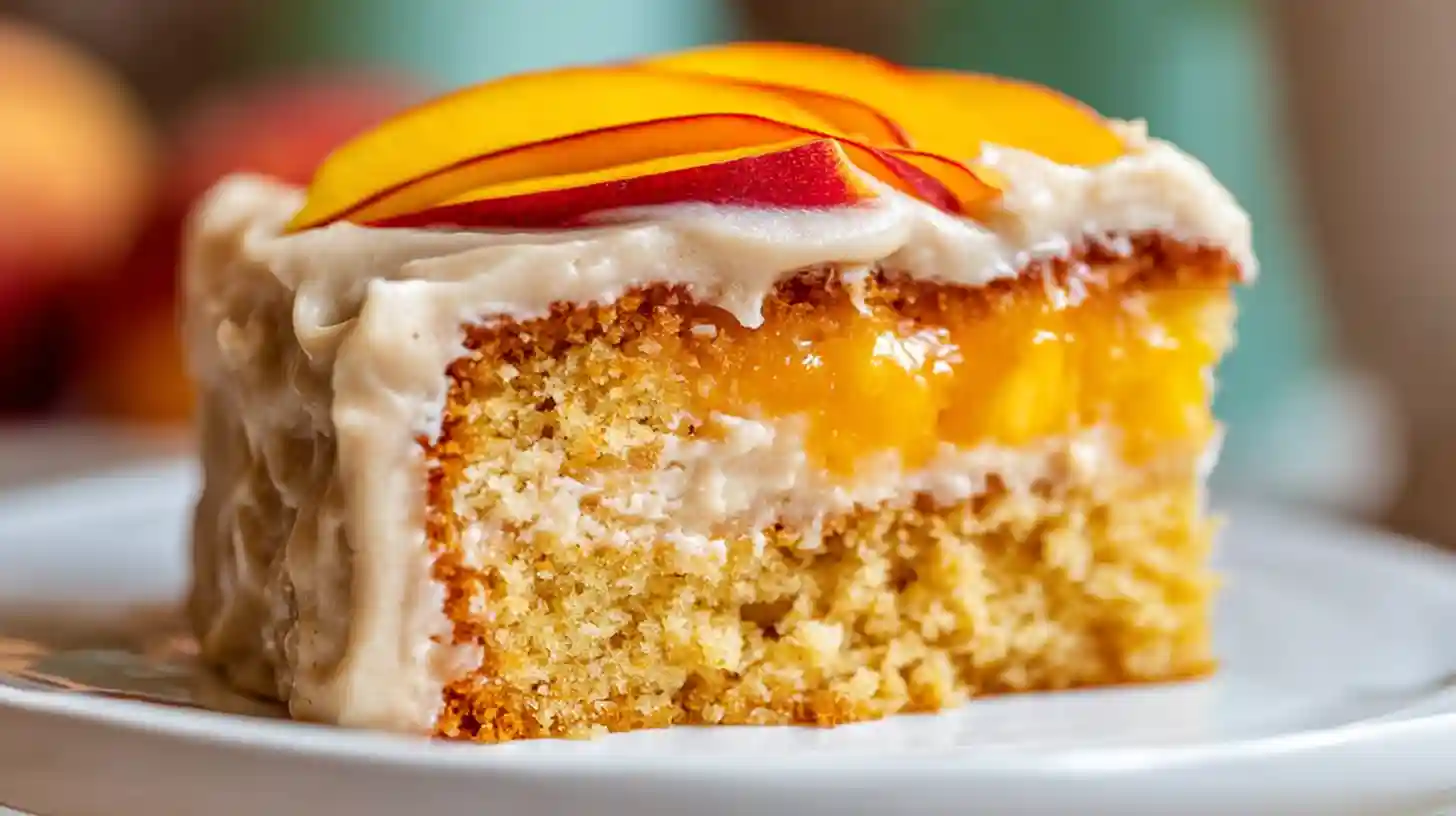
Brown Sugar Peach Cake
Ingredients
Equipment
Method
- Preheat oven to 350°F. Grease two 9-inch pans and line with parchment. Whisk dry ingredients together in a bowl and set aside.
- Cream butter with both sugars on medium speed for 4 to 5 minutes until light and fluffy. Add eggs one at a time, then sour cream and vanilla.
- Add flour mixture in three additions alternating with buttermilk in two additions, mixing on low only until just combined after each.
- Toss diced peaches in 1 tbsp flour, fold gently into batter with 6 to 8 strokes. Divide between pans and smooth tops.
- Bake 28 to 34 minutes until a toothpick comes out clean. Cool in pans 15 minutes then transfer to a wire rack and cool completely before frosting.
- Make frosting: melt butter in a saucepan, add brown sugar, stir and cook 2 minutes. Remove from heat, stir in cream carefully. Cool 20 minutes. Beat with powdered sugar, vanilla, and salt 3 to 4 minutes until smooth and spreadable.
- Frost the cooled cakes, spreading frosting between the layers and across the top and sides. Garnish with fresh peach slices if desired. Rest 15 minutes before slicing.
Notes
- All refrigerator ingredients must be at room temperature before starting – cold butter will not cream properly and produces a dense uneven crumb.
- Toss diced peaches in flour before folding – the coating prevents them from sinking to the bottom during baking.
- Do not overmix once flour is added – mix on low only until the flour just disappears to keep the crumb tender.
- Cool cakes completely before frosting – warm layers melt the brown sugar frosting and it will slide off.
- If frosting becomes grainy, return to low heat with a tablespoon of cream and stir until smooth, then cool again before beating.