
Acid marinades tenderize chicken on the surface but can make the exterior mushy if left too long. Yogurt works differently. Yogurt Marinated Chicken uses the lactic acid in plain yogurt, which tenderizes gently and deeply without breaking down the outer layer of the meat, producing chicken that stays moist through every cooking method and actually gets better the longer it sits. The yogurt also creates a thin coating that chars beautifully on the grill or caramelizes in a skillet, adding a layer of flavor that a standard oil-based marinade rarely produces. It is one of the best marinade for chicken approaches precisely because it’s so hard to overdo.
This recipe works for thighs, breasts, drumsticks, or a whole spatchcocked bird. The marinade ratio stays the same regardless of which cut you use, and the cooking method adapts easily to whatever you have available.
Yogurt Marinated Chicken Ingredients
The Marinade
- 1 cup plain whole milk yogurt, not Greek yogurt for this base, though Greek works too
- 3 tbsp olive oil
- 4 garlic cloves, finely minced or grated on a microplane
- 1 tbsp fresh lemon juice
- 1 tsp lemon zest
- 1.5 tsp smoked paprika
- 1 tsp ground cumin
- 1 tsp onion powder
- 1/2 tsp ground coriander
- 1/2 tsp ground turmeric
- 1 tsp salt
- 1/2 tsp black pepper
- 1/4 tsp cayenne pepper, optional for heat
- 2 tbsp fresh cilantro or parsley, finely chopped
The Chicken
- 2 lbs bone-in skin-on chicken thighs, or boneless skinless breasts, or drumsticks
Why This Yogurt Chicken Marinade Works So Well
The enzymes in yogurt break down protein slowly and evenly, which is why chicken marinated overnight in this mixture comes out tender all the way through rather than just on the surface. The fat from the olive oil and the yogurt’s own fat content carry the spice flavors deep into the meat during the marination period. Garlic grated on a microplane rather than minced distributes more evenly through the marinade and ensures the flavor reaches every part of every piece rather than concentrating in spots where visible garlic pieces are pressed against the meat. This yogurt chicken marinade for chicken also doubles as a dipping sauce base if a few tablespoons are set aside before the raw chicken touches it.
Scoring the chicken lightly before marinating is optional but effective. Two or three shallow cuts through the skin and into the top of the meat on each thigh allow the marinade to penetrate further than the surface alone, which makes the difference noticeable in the finished texture for thicker cuts like bone-in thighs or drumsticks.
How to Season, Marinate, and Cook the Chicken
- Combine all marinade ingredients in a bowl and whisk until smooth. Taste the marinade before the chicken goes in. Adjust salt, lemon, or spice level now since the flavor of the finished chicken is largely set by what the marinade tastes like at this stage.
- Pat chicken pieces dry with paper towels. Place in a large zip-lock bag or a shallow baking dish. Pour marinade over chicken and use your hands to coat every surface, getting under the skin on bone-in pieces where possible. Seal or cover tightly.
- Refrigerate for a minimum of 2 hours. Overnight, between 8 and 24 hours, produces noticeably more tender and flavorful chicken marination recipes results. Do not marinate longer than 24 hours since the lactic acid begins to over-tenderize the outer layer and the texture turns slightly pasty rather than moist and firm.
- Remove chicken from the refrigerator 30 minutes before cooking. Bringing it closer to room temperature promotes more even cooking from outside to center, which is especially important for bone-in pieces that are slow to heat through in the middle.
Grill Method
Preheat grill to medium-high, around 400°F. Shake off excess marinade before placing chicken on the grates. Too much yogurt on the surface flares up and burns before the chicken has time to cook through. Grill bone-in thighs 6 to 7 minutes per side, moving to indirect heat for the final 5 minutes to finish through without burning. Boneless breasts take about 5 to 6 minutes per side at medium-high heat. Internal temperature should reach 165°F at the thickest point.
Oven Method
Preheat oven to 425°F. Place marinated chicken on a wire rack set over a foil-lined baking sheet. The rack allows heat to circulate under the chicken and the yogurt coating to caramelize on the bottom as well as the top. Bone-in thighs take 35 to 40 minutes. Boneless breasts take 22 to 26 minutes depending on thickness. Broil for the last 3 to 4 minutes if more surface color is desired.
Variations, Substitutions, and Diet-Friendly Adjustments
For healthy marinated chicken recipes with a Mediterranean direction, replace the cumin and coriander with dried oregano, dried rosemary, and a pinch of dried thyme. Add a tablespoon of Dijon mustard to the marinade for a sharper, more complex flavor that works especially well with chicken for salads served over greens, cucumber, and tomato. For chicken diet recipes that stay lower in fat, use nonfat plain yogurt and reduce the olive oil to 1 tablespoon. The tenderizing quality of the yogurt remains the same regardless of fat content and the finished chicken is still noticeably more moist than a simple dry-seasoned breast cooked the same way.
Resting, Storing, and Serving
Rest the cooked chicken for 5 minutes before slicing or serving. This short rest allows the juices that were pushed toward the center of the meat during cooking to redistribute back through the whole piece. Slicing immediately after cooking causes the juices to run out onto the cutting board rather than staying in the meat where they belong. Store leftover cooked chicken in an airtight container for up to 4 days in the refrigerator. Slice or shred it cold and use over salads, in wraps, or tucked into pita with tzatziki. Reheat gently in a covered skillet over low heat with a tablespoon of water or broth to prevent drying out. The soft chicken recipes quality of this marinade holds well through reheating in a way that plain pan-seared chicken typically doesn’t.
FAQ
Can I use Greek yogurt instead of regular yogurt?
Yes. Greek yogurt is thicker and higher in protein than regular plain yogurt, and it produces a slightly more coating marinade that clings to the chicken more visibly before cooking. The tenderizing effect is comparable between the two since both contain lactic acid. Full-fat Greek yogurt produces a richer result than nonfat, and the thicker consistency means the coating caramelizes particularly well in the oven or on a hot grill. If Greek yogurt is what’s available, use it in the same quantity as the regular yogurt called for in this yogurt marinated chicken recipe without any other adjustments needed.
Can I freeze chicken in the yogurt marinade?
Yes, and it is one of the most practical meal prep applications for this recipe. Combine raw chicken with the full marinade in a freezer-safe zip-lock bag, press out as much air as possible, and freeze for up to 3 months. The chicken marinates as it thaws in the refrigerator overnight, arriving at its cooking-ready state already fully flavored and tenderized. This is the most efficient version of the chicken marination recipes format since the freezer work and the marinating happen simultaneously with no extra steps required on the cooking day beyond taking the bag out the night before.
Why does my yogurt coating burn on the grill before the chicken is cooked through?
Excess marinade on the surface is the cause in almost every case. Shake off or scrape off the bulk of the yogurt coating before the chicken goes on the grates, leaving only a thin film behind. The thin film browns and chars in an appealing way while the excess causes flare-ups and blackening. The second common cause is grill heat that is too high throughout the entire cook. Starting over direct medium-high heat for color and then moving to indirect heat for the remainder of the cook time gives the chicken time to reach 165°F in the center without the exterior of the best marinade for chicken result overcooking on the outside.
How long is too long to marinate?
Twenty-four hours is the practical maximum for this chicken with yogurt marinade. Beyond that point, the lactic acid has done its full tenderizing work and continued exposure starts to affect the outer texture of the meat in an unpleasant way, making the surface slightly mushy or pasty when cooked. The sweet spot for flavor and texture is 8 to 12 hours, which is why an overnight refrigerator marinate is the most consistently recommended timing. For a quicker turnaround, 2 hours produces noticeably better results than no marination at all, though the full overnight version is worth planning ahead for when texture is the priority.
Can I use this marinade on other proteins?
Yes. The yogurt marinade works on lamb, pork tenderloin, and firm white fish like halibut or cod with adjustments to marination time. Lamb benefits from a full 12 to 24 hours similar to chicken. Pork tenderloin needs only 4 to 8 hours since the meat is leaner and more delicate than chicken thighs. Fish should be marinated for no more than 30 to 45 minutes since the acid breaks down the more delicate fish protein quickly and longer exposure produces a mushy texture. The spice profile in this healthy marinated chicken recipes base pairs naturally with all of these proteins and doesn’t need to be adjusted beyond the timing change for each.
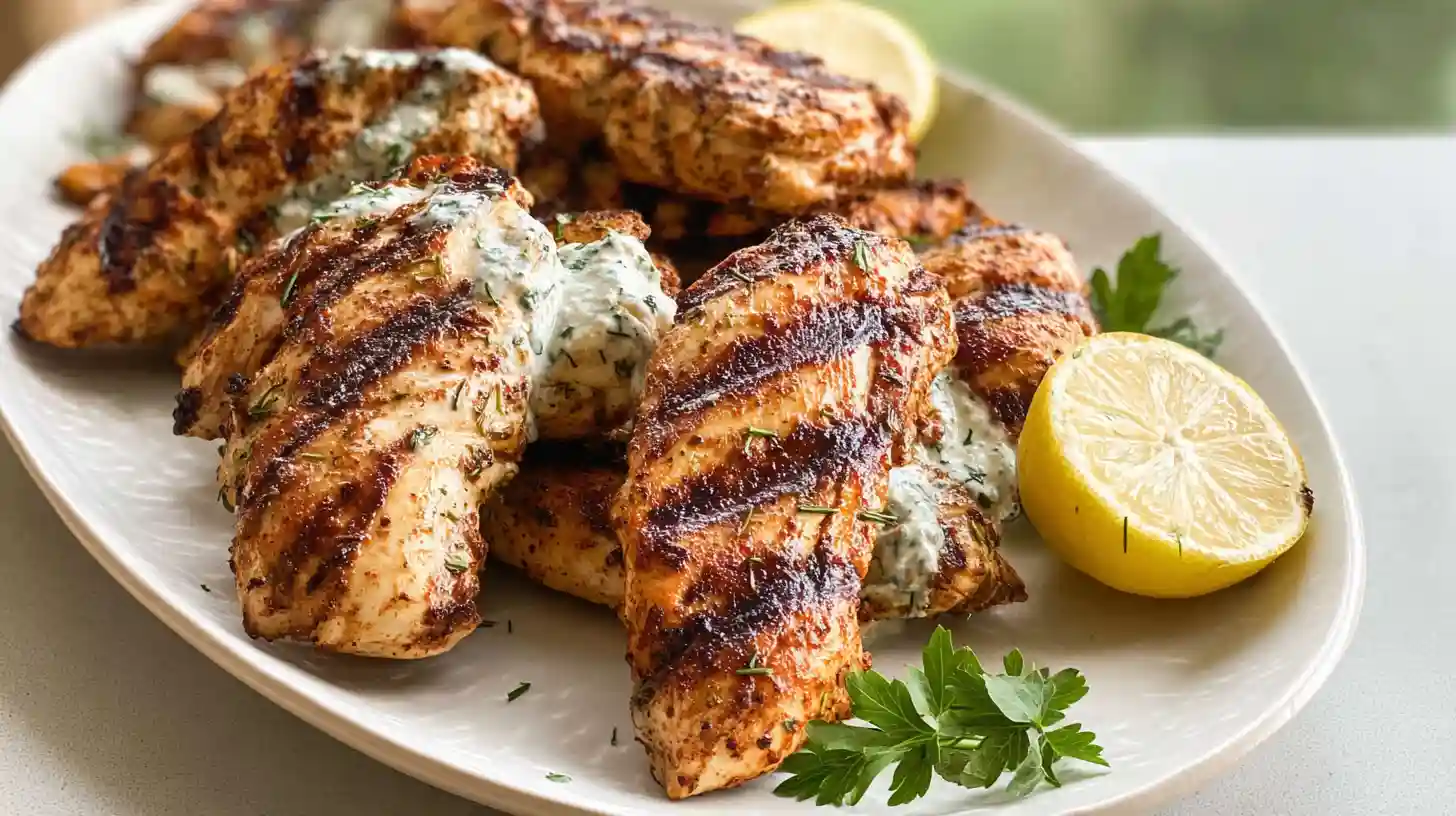
Yogurt Marinated Chicken
Ingredients
Equipment
Method
- Whisk all marinade ingredients together in a bowl until smooth. Taste and adjust salt, lemon, or spice level before adding chicken.
- Pat chicken dry, score lightly if desired, and place in a zip-lock bag or dish. Pour marinade over chicken, coat thoroughly, cover, and refrigerate 8 to 24 hours. Minimum 2 hours.
- Remove chicken from refrigerator 30 minutes before cooking.
- Grill method: Shake off excess marinade. Grill over medium-high heat 6 to 7 minutes per side for bone-in thighs, finishing on indirect heat. Cook to 165°F internal temperature.
- Oven method: Place on a wire rack over a foil-lined baking sheet. Bake at 425°F for 35 to 40 minutes for bone-in thighs, 22 to 26 minutes for boneless breasts. Broil 3 to 4 minutes for extra color if desired.
- Rest cooked chicken 5 minutes before slicing or serving.
Notes
- Do not marinate longer than 24 hours – lactic acid begins to over-tenderize the outer layer and texture becomes pasty.
- Grate garlic on a microplane rather than mincing for more even flavor distribution through the marinade.
- Shake off excess marinade before grilling to prevent flare-ups and burning.
- Rest chicken 5 minutes after cooking before slicing so juices redistribute rather than running out.
- Freeze raw chicken in the marinade for up to 3 months – it marinates as it thaws overnight in the refrigerator.