
The difference between good homemade pizza and great homemade pizza almost always comes down to the dough. This artisan pizza dough recipe builds toward a crispy, chewy, bubbly crust through a slow cold fermentation that develops flavor and structure in a way a same-day dough simply cannot match. The ingredients are minimal, flour, water, salt, yeast, and olive oil, but the method is what separates this from a standard recipe. You mix it the night before and the fridge does the work while you sleep.
No stand mixer is required. A bowl, your hands, and patience are the only real tools here. The dough is forgiving once you understand what it should feel like, and this recipe walks through exactly that.
Ingredients for Artisan Pizza Dough
Weight measurements produce more consistent results than volume for dough. A kitchen scale is worth using here if you have one.
- 500g (4 cups) bread flour or 00 flour, plus more for shaping
- 325g (1 and 1/3 cups) cold water
- 10g (2 tsp) fine sea salt
- 3g (3/4 tsp) instant yeast
- 15g (1 tbsp) olive oil
- Semolina flour for the pizza peel (optional but helpful)
How to Make Artisan Pizza Dough – Crispy Chewy Bubbly Crust
This is a two-day process with about 15 minutes of actual hands-on time. Most of the magic happens in the fridge.
Day One – Mix and Ferment
- In a large bowl, combine flour, salt, and instant yeast. Whisk briefly to distribute.
- Add cold water and olive oil. Mix with a fork or your hand until no dry flour remains. The dough will look shaggy and rough. That’s correct.
- Cover the bowl tightly with plastic wrap and let it rest at room temperature for 30 minutes.
- Perform four sets of stretch and folds over the next 2 hours. Every 30 minutes, wet your hand, grab one side of the dough, stretch it upward, and fold it over the top. Rotate the bowl and repeat on all four sides. This builds gluten without kneading.
- After the final fold, cover tightly and refrigerate for 18 to 72 hours. Longer fermentation produces more flavor and a more open bubbly pizza dough structure.
Day Two – Shape and Bake
- Remove dough from the fridge 1.5 to 2 hours before baking. Let it come to room temperature, covered, on a lightly floured surface.
- Divide into 2 or 3 equal portions depending on your desired pizza size. Shape each piece into a tight ball by tucking the dough under itself. Let rest uncovered for 30 minutes.
- Place a pizza stone or inverted baking sheet in the oven. Preheat to the highest temperature your oven allows, ideally 500 to 550°F, for at least 45 minutes.
- On a lightly floured surface, press each dough ball from the center outward with your fingers. Stretch gently by draping it over your knuckles and rotating, working toward the edges last. Aim for roughly 10 to 12 inches. Do not use a rolling pin.
- Transfer to a semolina-dusted pizza peel or parchment paper. Add toppings quickly.
- Slide onto the preheated stone and bake for 8 to 12 minutes until the crust is golden with char spots and the cheese is bubbling.
Why Your Crust Might Not Be Bubbling and How to Fix It
A flat, dense crust without bubbles is almost always a fermentation or heat issue. Under-fermented dough hasn’t developed enough gas pockets to produce that open, airy crumb and bubbly pizza dough texture on the surface. If you’re only giving the dough a few hours, the results will be noticeably less interesting than a full cold overnight. Extend the fridge time, at least 24 hours if possible, and the difference will be obvious.
Oven temperature is the other variable. A stone or steel that hasn’t preheated long enough won’t give the immediate burst of bottom heat that creates the crispy crust pizza dough effect in the first 60 seconds of baking. Preheat for a full 45 minutes at maximum heat and don’t skip it.
Flour Substitutions and What They Change
00 flour produces the most extensible, silky dough with a thin and tender texture when baked at high heat. It’s the standard for Neapolitan-style artisan pizza crust. Bread flour has more protein, which gives a chewier, sturdier crust that holds up better to heavy toppings and is easier to find in most grocery stores. All-purpose flour works in a pinch but produces a slightly less chewy and less structured result than either of the above options.
A mix of 70 percent bread flour and 30 percent 00 flour is a reliable middle ground for a crispy chewy pizza dough recipe that has both the chew of bread flour and some of the tenderness of 00.
Dough Variations for Different Crust Styles
For a thicker, pan-style base, increase the water to 375g for a higher hydration dough that spreads into an oiled cast iron pan rather than being stretched thin. It bakes at 450°F for 15 to 18 minutes instead of on a stone and produces a focaccia-like crumb with a deeply crisped bottom. For a cracker-thin artisan pizza crust, reduce water to 300g and roll the rested dough paper thin before baking on a preheated stone for 6 to 7 minutes.
Storing and Freezing Dough Portions
Shaped dough balls refrigerate well for up to 3 days after the initial cold ferment. Keep them covered in oiled containers so they don’t dry out or form a skin. For longer storage, freeze shaped balls in individual zip bags after the cold ferment, before the room temperature rest. Thaw overnight in the fridge, then follow the same room temperature rest before shaping and baking. Frozen dough is a practical way to have artisan pizza dough with a crispy chewy bubbly crust ready on short notice without starting from scratch.
FAQ
Can I make this dough without a pizza stone?
Yes. An inverted heavy baking sheet preheated in the oven works reasonably well. The bottom crust won’t get quite as crisp as a stone or steel since metal doesn’t retain heat the same way, but preheating it fully for 45 minutes gets it as close as possible. A cast iron skillet is another option, preheat it on the stovetop until very hot before sliding the stretched dough in and transferring immediately to a hot oven.
Why does my dough tear when I stretch it?
Tearing almost always means the gluten is too tight and needs more rest. If the dough keeps snapping back or tearing during shaping, cover it loosely and let it rest for another 15 to 20 minutes at room temperature before trying again. The gluten relaxes with time and the dough becomes much more cooperative. Never force a stretch on cold or under-rested dough since tearing is almost guaranteed.
How do I know if my dough has fermented enough?
After the cold ferment, the dough should have increased in volume noticeably, feel airy and slightly tacky rather than stiff, and show some bubbles on the surface when you gently pull back the covering. When you press a floured finger into the dough ball, the indent should spring back slowly but not all the way. That partial spring-back indicates proper fermentation and a dough ready to shape into a bubbly pizza dough recipe crust.
Can I use active dry yeast instead of instant yeast?
Yes. Use the same amount but dissolve it in a few tablespoons of the water from the recipe, lukewarm, for 5 to 10 minutes before adding to the flour. The dough behaves the same way after that. Instant yeast can go directly into the flour without proofing, which is why it’s easier to use, but active dry yeast produces identical results once it’s properly activated.
Can I make same-day pizza dough if I don’t have time to ferment overnight?
You can, though the flavor and texture won’t match a cold-fermented artisan pizza dough. For a same-day version, increase yeast to 7g, use warm rather than cold water, and let the dough rise at room temperature for 1 to 2 hours until doubled. The crust will be softer and less complex but still bakes with a decent crispy chewy pizza dough texture at high heat. The overnight method is always worth the wait when you have the time to plan ahead.
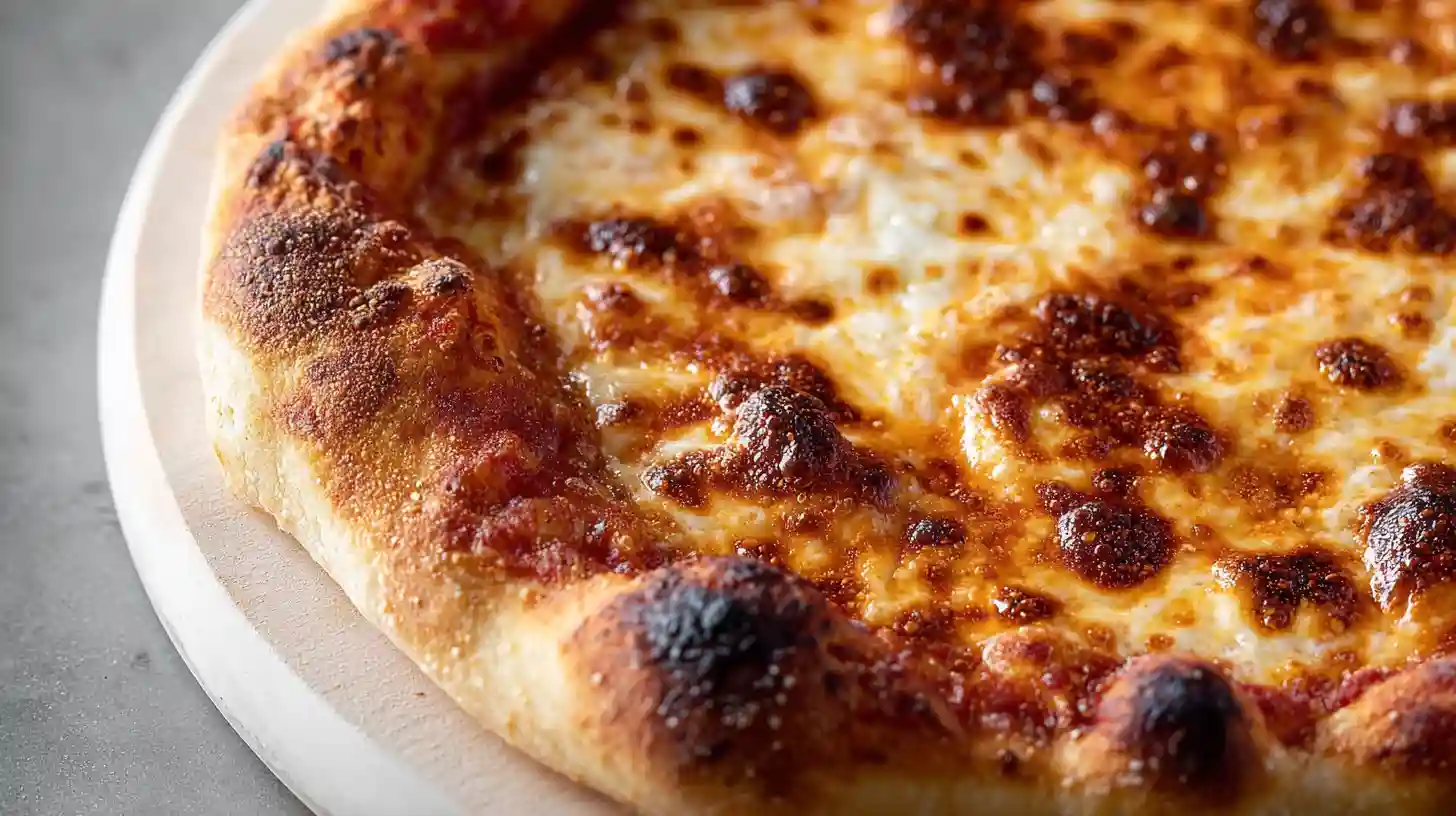
Artisan Pizza Dough – Crispy, Chewy, Bubbly Crust
Ingredients
Equipment
Method
- Combine flour, salt, and yeast in a large bowl. Add cold water and olive oil. Mix until no dry flour remains.
- Rest covered at room temperature for 30 minutes. Perform 4 sets of stretch and folds every 30 minutes over 2 hours.
- Refrigerate tightly covered for 18 to 72 hours for cold fermentation.
- Remove dough from fridge 1.5 to 2 hours before baking. Divide, shape into balls, and rest covered 30 minutes.
- Preheat oven with pizza stone to maximum temperature (500 to 550°F) for 45 minutes.
- Stretch dough by hand to 10 to 12 inches. Add toppings and bake on preheated stone for 8 to 12 minutes until golden and charred.
Notes
- Longer cold fermentation (48 to 72 hours) produces significantly more flavor and better bubbles.
- Never use a rolling pin – it deflates the air pockets that create the bubbly crust.
- Preheat the stone for a full 45 minutes for a properly crispy bottom crust.
- If dough tears during stretching, cover and rest 15 more minutes before trying again.
- Freeze shaped dough balls after cold ferment for up to 3 months.