
Classic eggplant parmesan is one of those recipes that improves every time you make it, partly because the technique becomes second nature and partly because each component – the breaded eggplant, the sauce, the cheese – has room to be done well or done lazily. Done well, you get distinct crispy layers that hold their texture under the sauce in the baked dish. Done lazily, you get a soggy casserole that tastes like wet breadcrumbs. This recipe focuses on the details that actually matter.
Salting the eggplant before breading is not optional here. It pulls out excess moisture that would otherwise steam inside the crust during baking and turn the breading soft. Twenty minutes with salt draws out enough liquid to make a noticeable difference in the final texture of the baked eggplant parmesan in a dish. Pat it completely dry before the egg and breadcrumb stations and the crust will crisp as intended.
Ingredients for Classic Eggplant Parmesan
Use globe eggplant rather than Japanese or Chinese varieties – the wider diameter gives slices that fit the baking dish properly without curling at the edges. One large or two medium eggplants yield enough slices for a 9×13 dish with three full layers.
- 2 medium globe eggplants, cut into 1/3-inch rounds – about 2 lbs total
- 1.5 teaspoons kosher salt – for drawing moisture out
- 2 large eggs, beaten
- 2 tablespoons whole milk
- 1.5 cups Italian breadcrumbs
- 1/2 cup finely grated Parmesan cheese, divided
- 1 teaspoon garlic powder
- 1/2 teaspoon dried oregano
- Olive oil for pan-frying – about 1/2 cup total, used in batches
- 2.5 cups marinara sauce – homemade or a quality jarred variety
- 2 cups shredded low-moisture mozzarella
- Fresh basil leaves to finish
- Red pepper flakes – optional, for serving
How to Build and Bake Classic Eggplant Parmesan
- Lay the eggplant slices in a single layer on a sheet pan lined with paper towels. Sprinkle both sides with kosher salt and let them sit for 20 to 25 minutes. Blot dry thoroughly with fresh paper towels – press firmly to absorb as much moisture as possible.
- Preheat the oven to 375°F.
- Set up a breading station with two shallow bowls – one with the beaten eggs and milk combined, and one with the breadcrumbs, half the Parmesan, garlic powder, and oregano mixed together.
- Dip each eggplant slice in the egg mixture, letting the excess drip off, then press into the breadcrumb mixture coating both sides evenly. Set breaded slices on a clean rack as you work.
- Heat a thin layer of olive oil in a large skillet over medium-high heat. Working in batches to avoid crowding, fry each slice for 2 to 3 minutes per side until golden and crisp. Transfer to a paper towel-lined plate and repeat, adding fresh oil between batches as needed. Do not skip this frying step even for a baked eggplant parmesan in a pan – pre-frying sets the crust so it stays crisp under the sauce rather than absorbing it during the bake.
- Spread a thin layer of marinara on the bottom of a 9×13 inch baking dish – glass or ceramic both work, and a baked eggplant parmesan in glass dish retains heat well for serving. Arrange a single layer of fried eggplant slices over the sauce, slightly overlapping if needed. Spoon marinara over the eggplant, then scatter mozzarella and a tablespoon of Parmesan on top. Repeat the layers – eggplant, sauce, mozzarella, Parmesan – until all the eggplant is used. Finish with a final layer of sauce and a generous amount of mozzarella and the remaining Parmesan on top.
- Cover tightly with foil and bake for 25 minutes. Remove the foil and bake uncovered for another 15 to 18 minutes until the cheese is golden and the sauce is visibly bubbling at the edges. Rest for 10 full minutes before cutting – this allows the layers to set so they hold their shape on a white plate rather than sliding apart.
Common Problems and How to Fix Them
Soggy eggplant inside a baked dish almost always traces back to one of two things – skipping the salting step, or adding too much sauce between layers. The sauce quantity per layer should be light, enough to coat the eggplant surface but not pool between slices. A healthy eggplant parmesan dish also benefits from using low-moisture mozzarella rather than fresh buffalo mozzarella, which releases a significant amount of water during baking and dilutes the sauce. Low-moisture shredded mozzarella melts evenly and keeps the layers distinct. If the top is browning faster than the layers are cooking through, tent loosely with foil for the last 10 minutes of uncovered baking rather than reducing the oven temperature.
Lighter Variations and Easy Swaps
For eggplant parmesan recipes that skip the frying entirely, brush the breaded slices with olive oil on both sides and bake on a wire rack set over a sheet pan at 425°F for 20 to 22 minutes, flipping once halfway through. The result is less uniformly golden than pan-fried but still develops a decent crust before going into the casserole dish. Panko breadcrumbs produce a crunchier texture than fine Italian breadcrumbs and hold up slightly better through the full bake. For eggplant parm stacks served individually on plates rather than as a full casserole, layer three slices per plate with sauce and cheese between each and broil for 3 to 4 minutes until the top is melted and golden – a good approach when serving a smaller number and plating matters.
Storing and Reheating
Leftovers keep in the fridge covered for up to 4 days. The eggplant softens further overnight as it continues absorbing the sauce, which some people actually prefer – the flavors deepen and the layers become more cohesive. To reheat a portion while preserving some crust texture, use a 350°F oven covered with foil for 15 minutes then uncover for 5 more. The microwave works for speed but produces a softer result with no crunch on the cheese. Freeze individual portions wrapped tightly in foil and stored in a zip bag for up to 2 months. Thaw overnight in the fridge before reheating in the oven. Serve with crusty bread to scoop up the extra sauce, or alongside a simple arugula salad dressed with lemon and olive oil.
FAQ
Does eggplant parmesan need to be fried before baking?
Pre-frying is what sets the crust so it stays crispy through the bake rather than going soft under the sauce. If you bake the breaded slices raw instead, the crust absorbs moisture from the egg coating and the sauce before it can properly crisp, and you end up with a texture closer to a very soft layered casserole than a classic eggplant parmesan dish with distinct crispy layers. Oven-crisping with brushed olive oil is a middle option that works reasonably well if frying is not preferred.
How thick should I slice the eggplant?
About one third of an inch is the sweet spot. Thinner slices – closer to a quarter inch – become very soft and almost disappear into the sauce during baking, losing the substance that makes each layer satisfying. Thicker slices over half an inch take longer to cook through and can remain slightly dense or chewy at the center even after the full bake time. Uniform thickness matters more than the exact measurement – use a mandoline or take your time with a sharp knife to keep the slices consistent so they cook evenly.
Can I assemble eggplant parmesan ahead of time and bake it later?
Yes. Assemble the full casserole, cover tightly with foil, and refrigerate for up to 24 hours before baking. When ready, bake from cold by adding 10 extra minutes to the covered phase before removing the foil to brown the top. The crust will be slightly less crisp than when baked fresh, but the flavor is often better the next day because the layers have more time to meld together before heat is applied.
What is the best sauce to use – jarred or homemade?
A good quality jarred marinara works perfectly well here. Look for one with a short ingredient list and no added sugar – the eggplant adds enough natural sweetness during baking that extra sugar in the sauce makes the finished dish taste unbalanced. If making a simple homemade sauce, cook crushed San Marzano tomatoes with olive oil, garlic, salt, and a few fresh basil leaves for 20 minutes and it will be better than most jarred options. Either way, avoid watery sauce with a lot of separated liquid at the top of the jar – drain any excess before using.
How do I keep the layers from sliding when I serve it?
The 10-minute rest after pulling the casserole from the oven is essential. The cheese and sauce need time to cool slightly and firm up before the layers can hold their shape when cut. Cutting too early releases all the heat at once and the layers slide apart on the plate. A sharp spatula inserted cleanly under the bottom layer and lifted in one confident motion also helps maintain the stack when serving the eggplant parmesan on a white plate or into a shallow bowl.
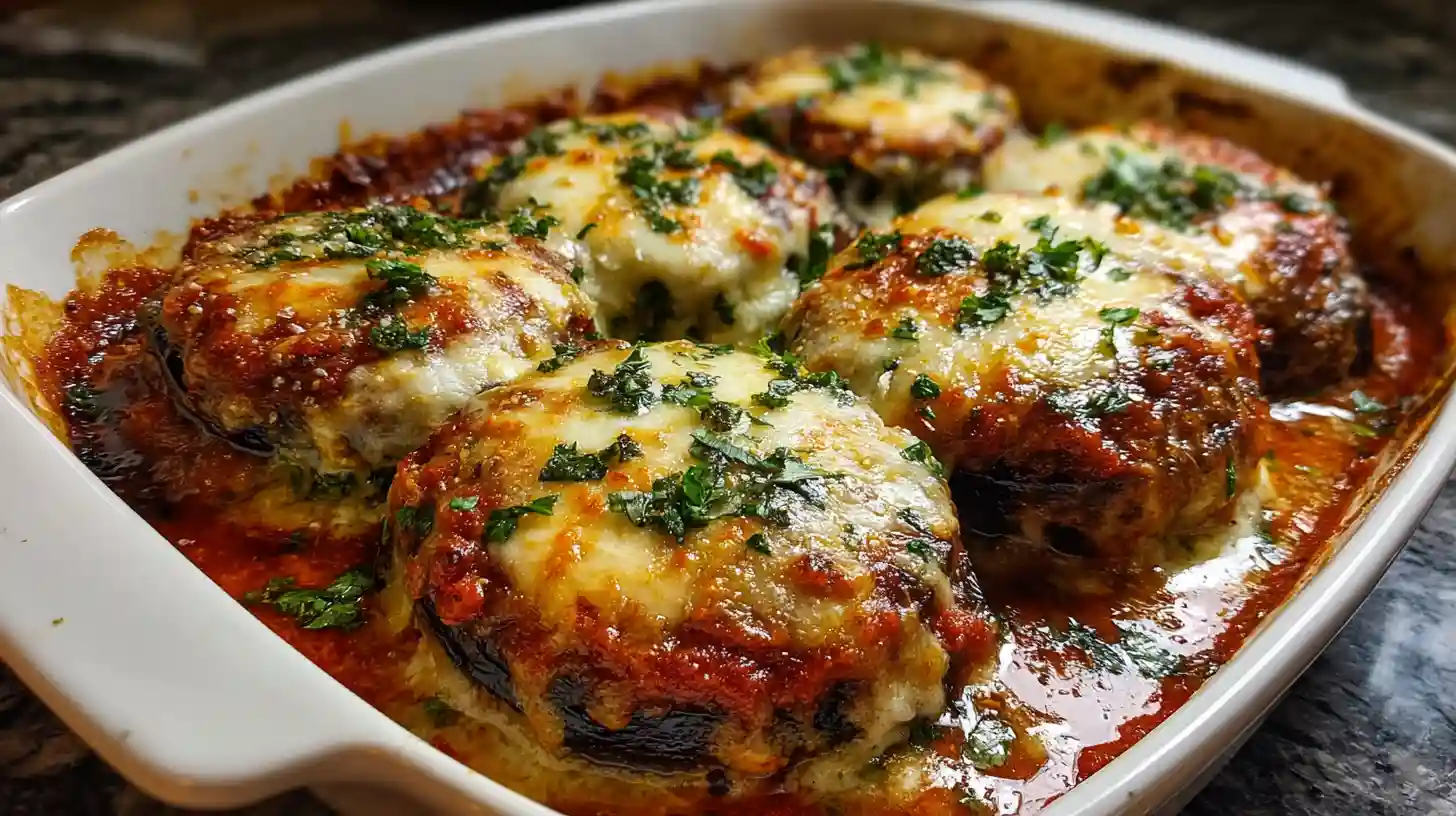
Classic Eggplant Parmesan
Ingredients
Equipment
Method
- Salt eggplant slices on both sides and rest 20 to 25 minutes. Pat completely dry.
- Preheat oven to 375°F.
- Set up breading station with egg and milk in one bowl, breadcrumbs mixed with Parmesan, garlic powder, and oregano in another.
- Bread each eggplant slice through egg then breadcrumbs, coating both sides evenly.
- Fry in batches in olive oil over medium-high for 2 to 3 minutes per side until golden. Drain on paper towels.
- Layer in a 9×13 dish starting with a thin base of marinara, then eggplant, sauce, mozzarella, and Parmesan. Repeat layers and finish with sauce and cheese on top.
- Bake covered for 25 minutes, then uncovered for 15 to 18 minutes until golden and bubbling.
- Rest 10 minutes before cutting. Finish with fresh basil.
Notes
- Never skip salting and drying the eggplant – it prevents a soggy crust.
- Use low-moisture mozzarella, not fresh buffalo, to avoid excess water during baking.
- Keep the sauce layer between slices light to maintain distinct layers.
- Rest the casserole 10 minutes after baking so layers hold when cut and served.